Learn. Grow. Succeed.Your Future Starts Here
Access expert-crafted courses across 6+ categories and gain skills that help you advance your career.
Browse by Category
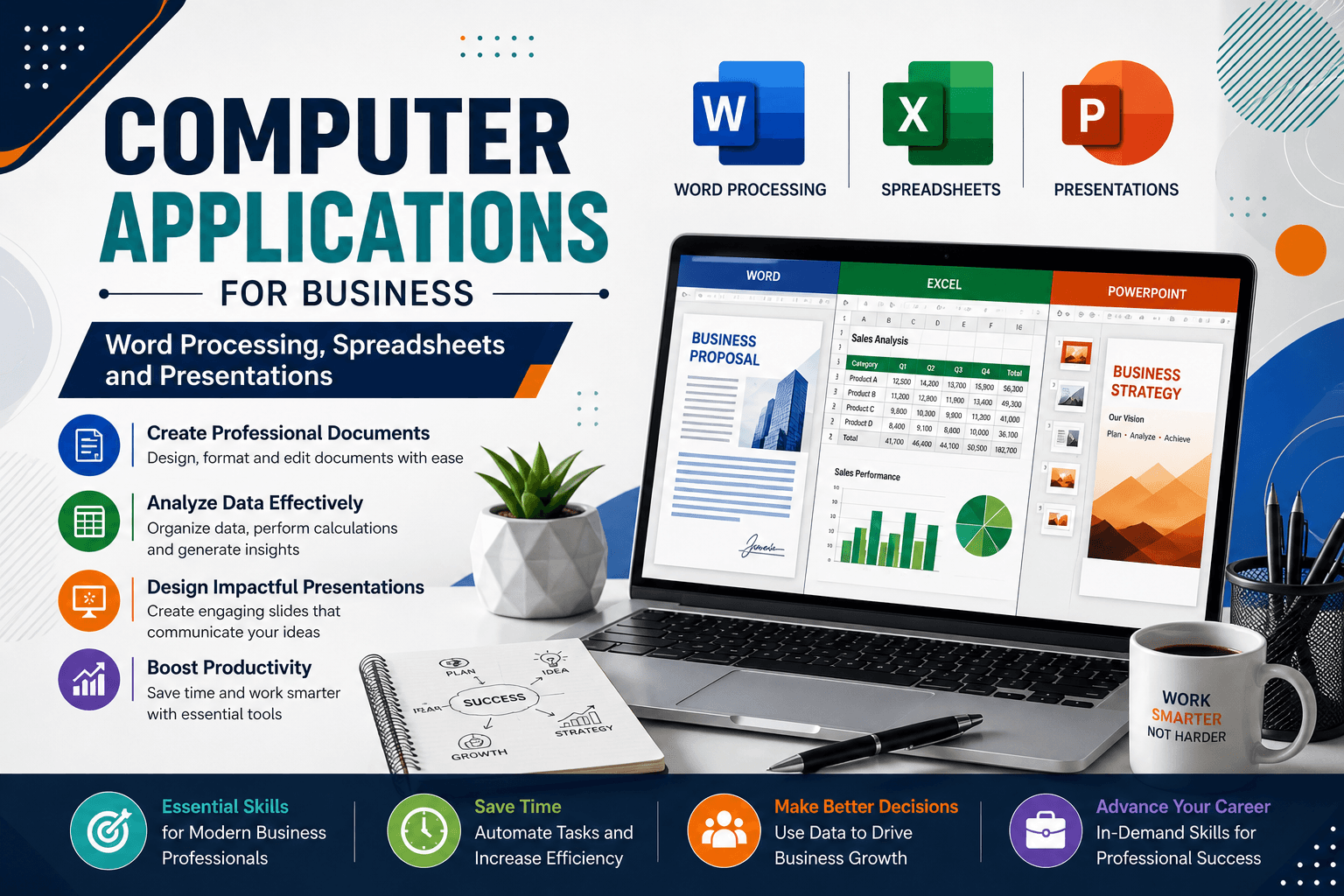
Computer Applications for Business: Word Processing, Spreadsheets and Presentations
This course covers essential computer applications for business, starting with word processing and presentation software. You will learn spreadsheet concepts and business applications, including loan and lease statements, ratio analysis, and graphical data representation. The course also introduces database management systems, covering entity-relationship models, keys, and relationships.
Environmental Science and Ecology | Pollution, Biodiversity & Conservation
This course provides a comprehensive introduction to environmental studies, covering the multidisciplinary nature of the field, natural resources, ecosystems, biodiversity and its conservation, environmental pollution, and social issues related to the environment. Students will explore key concepts such as sustainable development, pollution control measures, and conservation strategies. The course includes case studies and practical examples to illustrate real-world environmental challenges and
Probability and Statistics for Beginners | Complete Engineering Course
This course covers the mathematical foundations most widely used in engineering: random variables, probability distributions, correlation and regression, sampling, and hypothesis testing for both large and small samples. Students learn to model uncertainty, analyze data, and draw valid inferences using modern statistical techniques.
Database Management Systems (DBMS)
This course covers the core concepts of database management systems, from fundamental data models and the relational model to SQL and advanced query techniques. Students will learn database design, transaction management, concurrency control, and how to write complex SQL queries using joins, views, and set operations. The course includes practical examples and review questions to reinforce learning.
Operating Systems Tutorial for Beginners
This course provides a comprehensive tour of operating system design, from batch and monolithic kernels through process scheduling, memory management, paging and virtual memory, I/O hardware and buffering, file systems and protection. It also examines real-world case studies including Unix and Windows NT, covering access control, mutual suspicion, and NTFS internals. Students gain the conceptual foundation needed to understand how modern OSes manage hardware, processes, and security.
Discrete Mathematics for Beginners | Complete Course
Master the foundations of discrete mathematics, covering mathematical logic, relations, functions, algebraic structures, and graph theory. Learn to construct proofs, analyze relations, and apply graph representations to solve computational problems. This course is essential for computer science students seeking a rigorous mathematical background.
Mathematical Logic for Beginners | Complete Study Course
This course provides a guided tour of mathematical logic, covering first-order logic, model theory, computability, incompleteness, set theory, intuitionistic logic, proof theory, and modal logics. Based on Peter Smith's Study Guide, it helps you navigate the best textbooks and resources for each topic. You'll gain a deep understanding of key concepts and be equipped to pursue further study in logic.
Digital Electronics Tutorial for Beginners
This course covers the fundamentals of digital electronics, focusing on number systems, binary codes, and digital arithmetic. Students will learn about decimal, binary, octal, and hexadecimal systems, conversions, signed number representations, floating-point standards, and various binary codes including BCD, Gray, ASCII, and Unicode. Error detection and correction codes are also explored.
Computer Fundamentals Course for Beginners | Hardware, Memory & I/O
This course provides a foundational understanding of computer systems, covering the history and generations of computers, hardware components including CPU and memory, and input/output devices. Students will learn how computers process data, the role of different memory types, and how peripherals interact with the system. Ideal for beginners seeking a comprehensive overview of computer fundamentals.
Cloud Computing and Big Data Fundamentals
This course provides a comprehensive introduction to cloud computing and big data. You will learn cloud concepts, service models (IaaS, PaaS, SaaS), deployment models, storage, security, and business models. It also covers big data fundamentals, including characteristics, benefits, and traditional vs. big data approaches. Ideal for beginners seeking foundational knowledge in modern computing technologies.
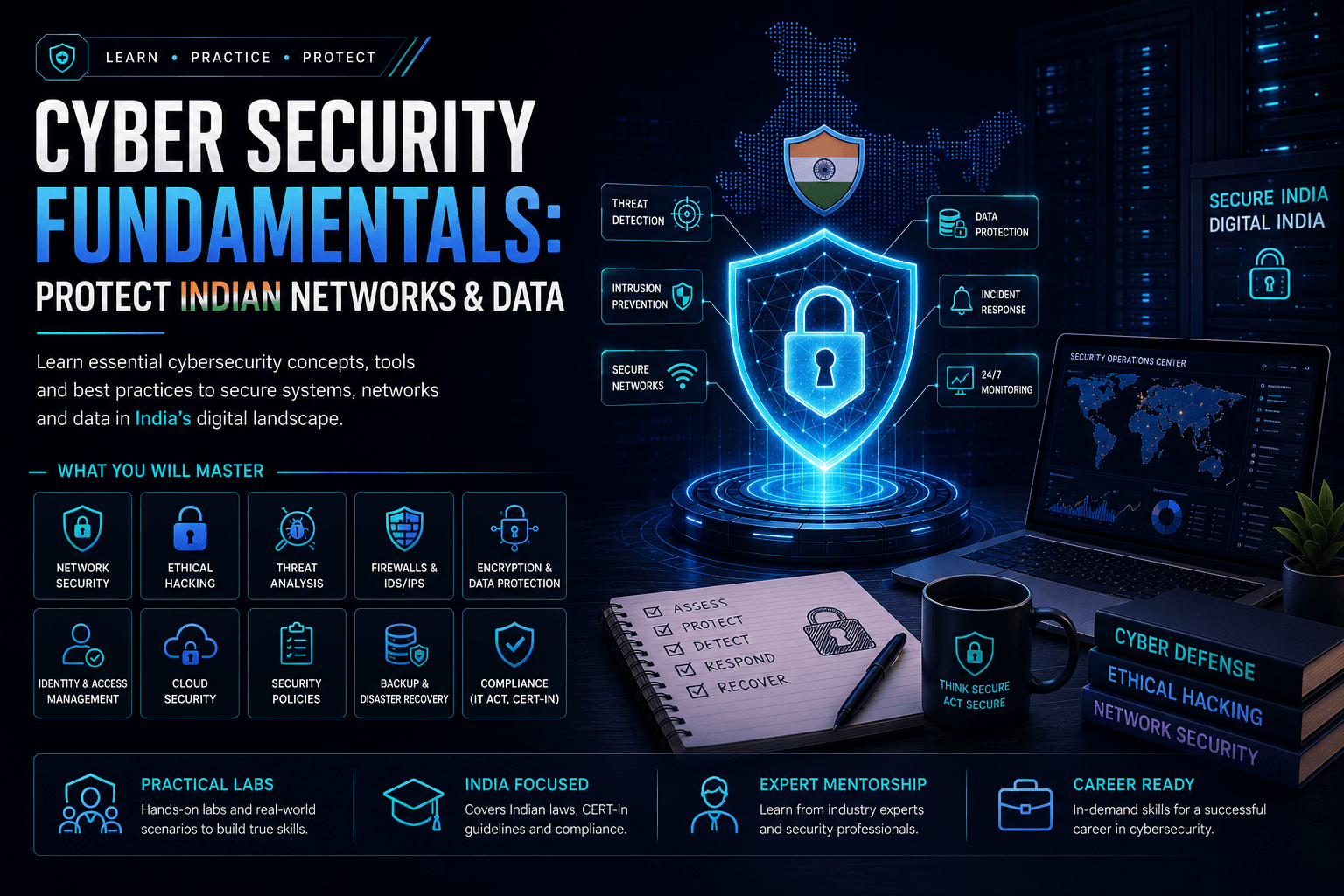
Cyber Security Fundamentals: Protect Indian Networks & Data
This course is designed for third-year B.Tech IT students who want to understand real-world cyber threats and how to defend against them. You'll learn through Indian case studies like the Maharashtra Government website hack and Indian bank frauds, and master the CIA triad, cyber forensics, and privacy laws. After completing this course, you'll be able to identify vulnerabilities, conduct basic forensic investigations, and apply security policies in Indian organizations. Unlike generic courses, we focus on Indian cyber regulations (IT Act, NSCP) and practical scenarios from Indian companies like Razorpay and Flipkart.
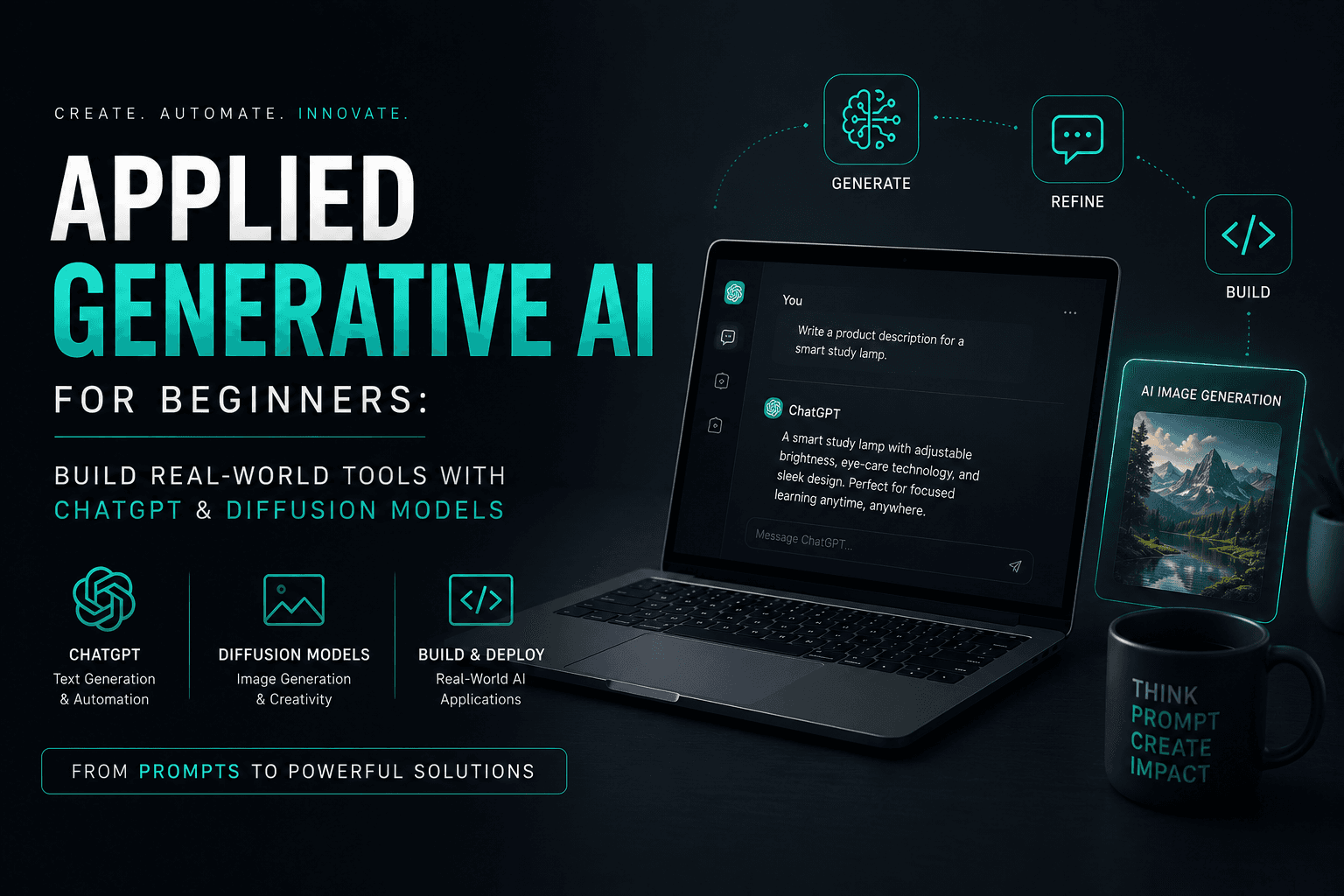
Applied Generative AI for Beginners: Build Real-World Tools with ChatGPT & Diffusion Models
This course is for Indian beginners who want to move beyond just using ChatGPT and actually understand how generative AI works under the hood. You'll learn the core concepts of large language models and diffusion models through practical, hands-on projects like building a customer support chatbot for a Zomato-like scenario and generating product images for a D2C brand. Unlike theoretical courses, we focus on what you can build and deploy today — using free tools and APIs. By the end, you'll be able to create your own AI-powered tools, understand prompts deeply, and confidently discuss generative AI in interviews.
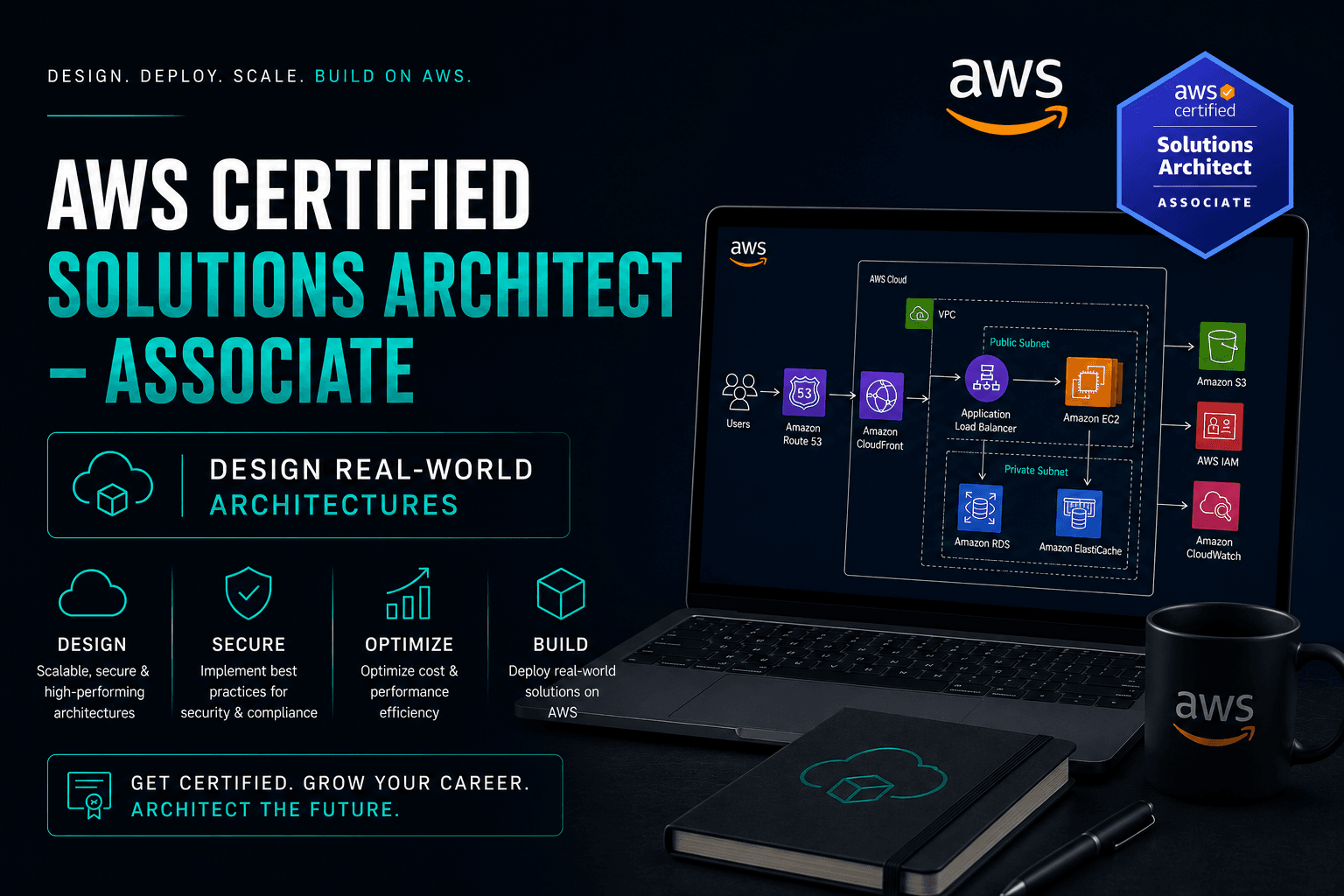
AWS Certified Solutions Architect Associate: Design Real-World Architectures
This course is your complete preparation for the SAA-C03 exam, designed for Indian IT professionals who want to master AWS architecture design. You'll learn to build secure, resilient, high-performing, and cost-optimized cloud solutions using real-life scenarios from Indian startups and enterprises like Razorpay, Flipkart, and Zerodha. Each chapter ends with a practical task you can apply today—like designing a multi-tier VPC for a Bengaluru-based SaaS company. With 20 focused chapters, hands-on exercises, and exam-style quizzes, you'll gain the confidence to pass the exam and architect production-grade AWS solutions.
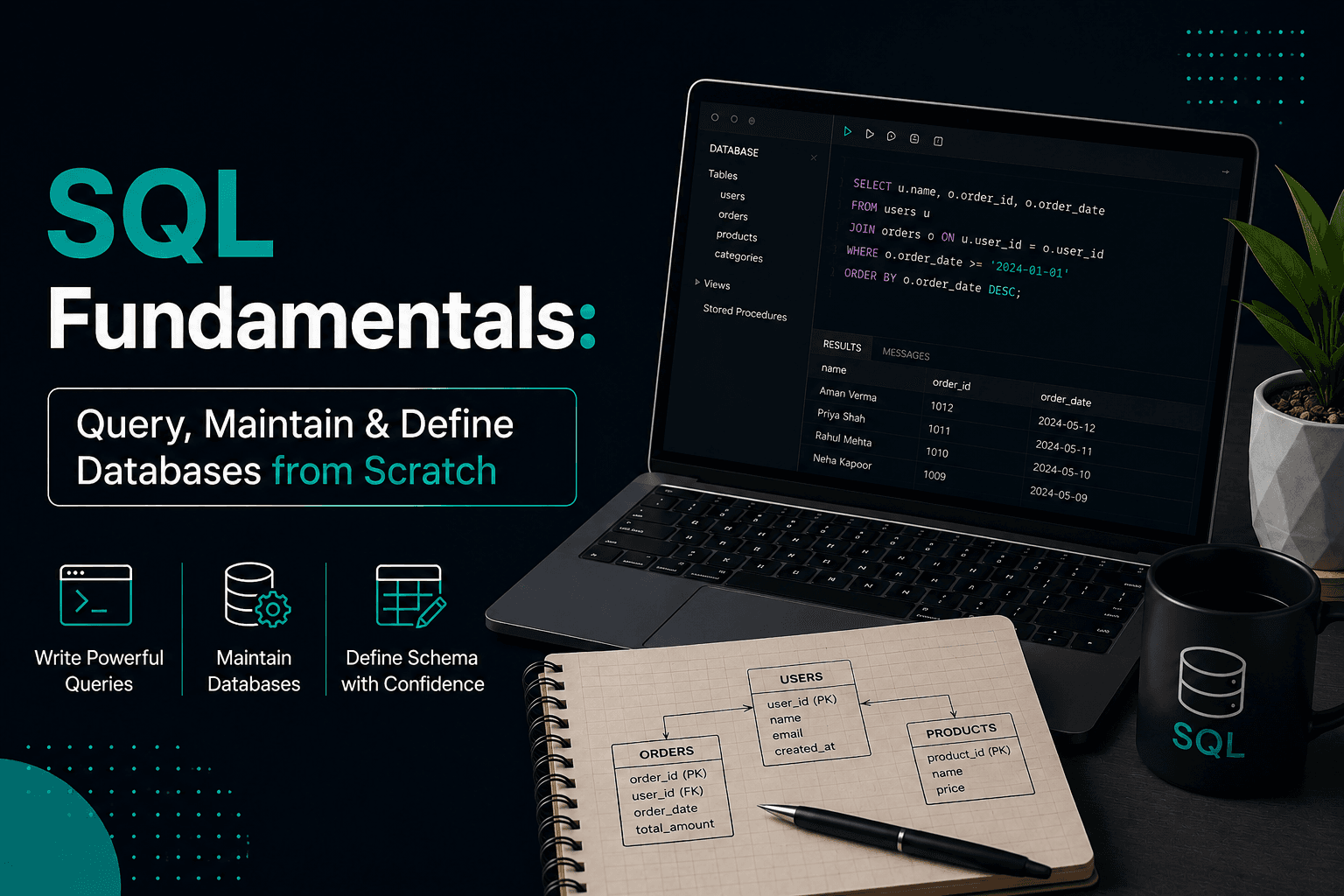
SQL Fundamentals: Query, Maintain, and Define Databases from Scratch
This course is for absolute beginners who want to master SQL — the language of data. Whether you're a student in Bengaluru, a data analyst in Pune, or a developer at a startup, you'll learn to query databases like a pro. Through real Indian scenarios (e.g., retrieving orders for a Swiggy clone, updating customer data for a Zomato-like app, deleting obsolete records for a Razorpay dashboard), you'll gain hands-on skills. By the end, you'll be able to write complex SELECT queries, insert/update/delete data safely, and create tables with constraints. No prior database knowledge needed. All examples use Indian names, ₹ amounts, and familiar companies.
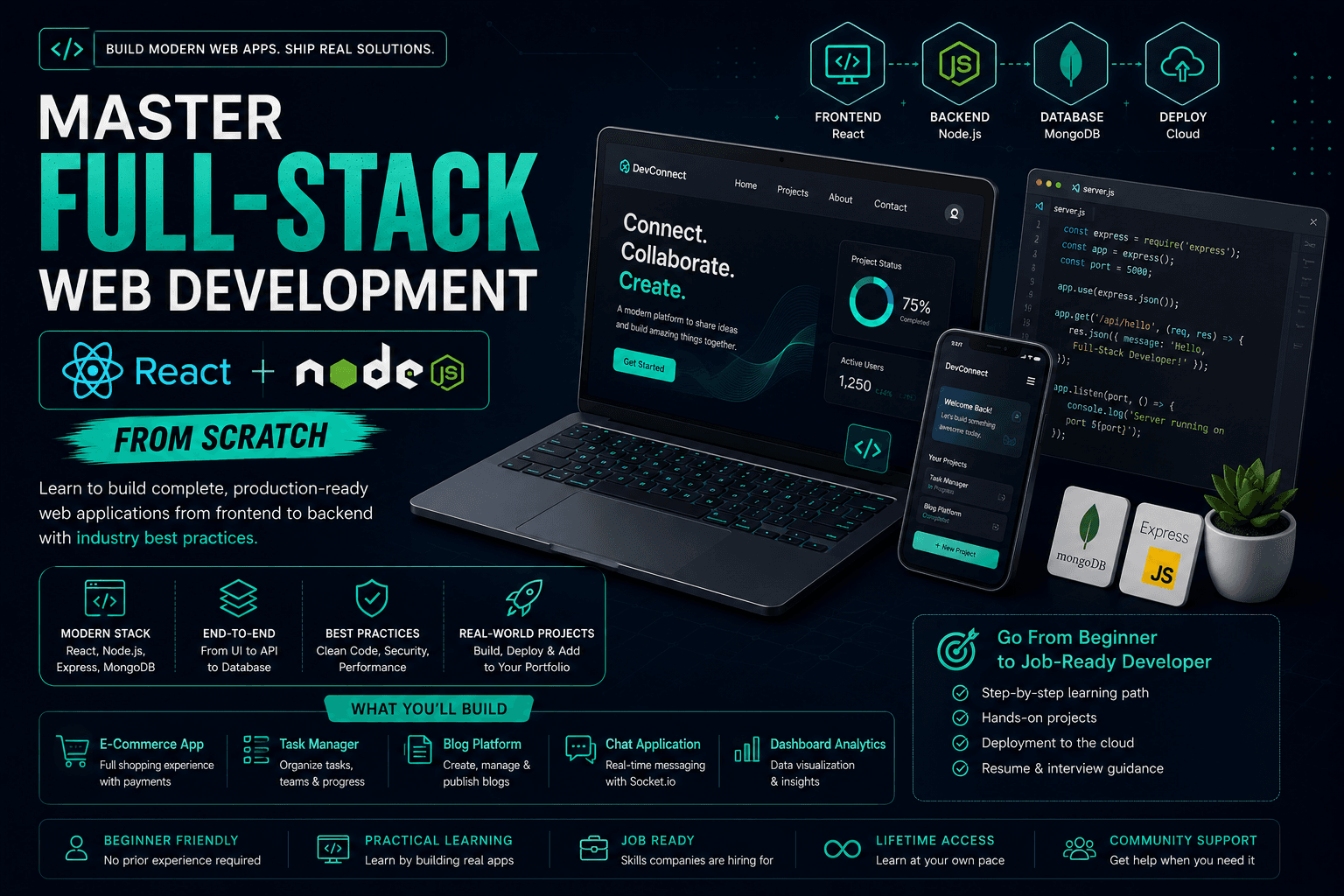
Master Full-Stack Web Development: React & Node.js from Scratch
This course is designed for college students, aspiring software engineers, and IT professionals who want to build complete web applications like a pro. You'll learn front-end with HTML, CSS, JavaScript, and React, then dive into back-end with Node.js, Express, and MongoDB. By the end, you'll deploy a full-stack app to the cloud using Vercel and Render. Unlike generic courses, we use Indian examples — building a Zomato-style restaurant listing, a Swiggy cart, and a Razorpay checkout flow. All code is explained in Hinglish, with real-world bugs and fixes. No fluff, just practical skills you can use from day one.
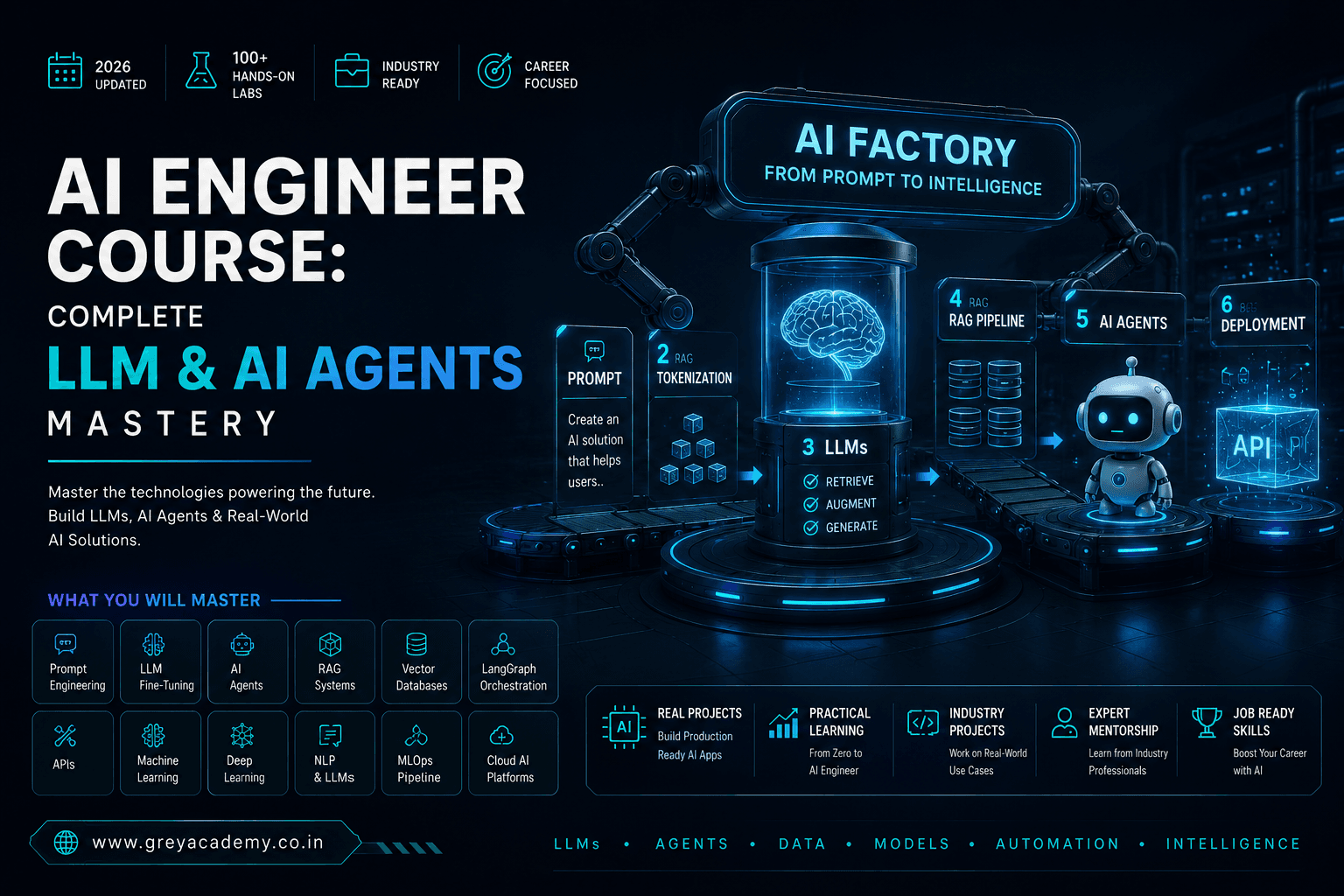
AI Engineer Course: Complete LLM & AI Agents Mastery
Become an AI Engineer in 2026! This comprehensive course covers everything from LLM fundamentals to building autonomous AI agents. Learn LangChain, LlamaIndex, RAG systems, vector databases, prompt engineering, and deploy real-world AI applications. Perfect for developers who want to master the hottest tech skill of 2026.
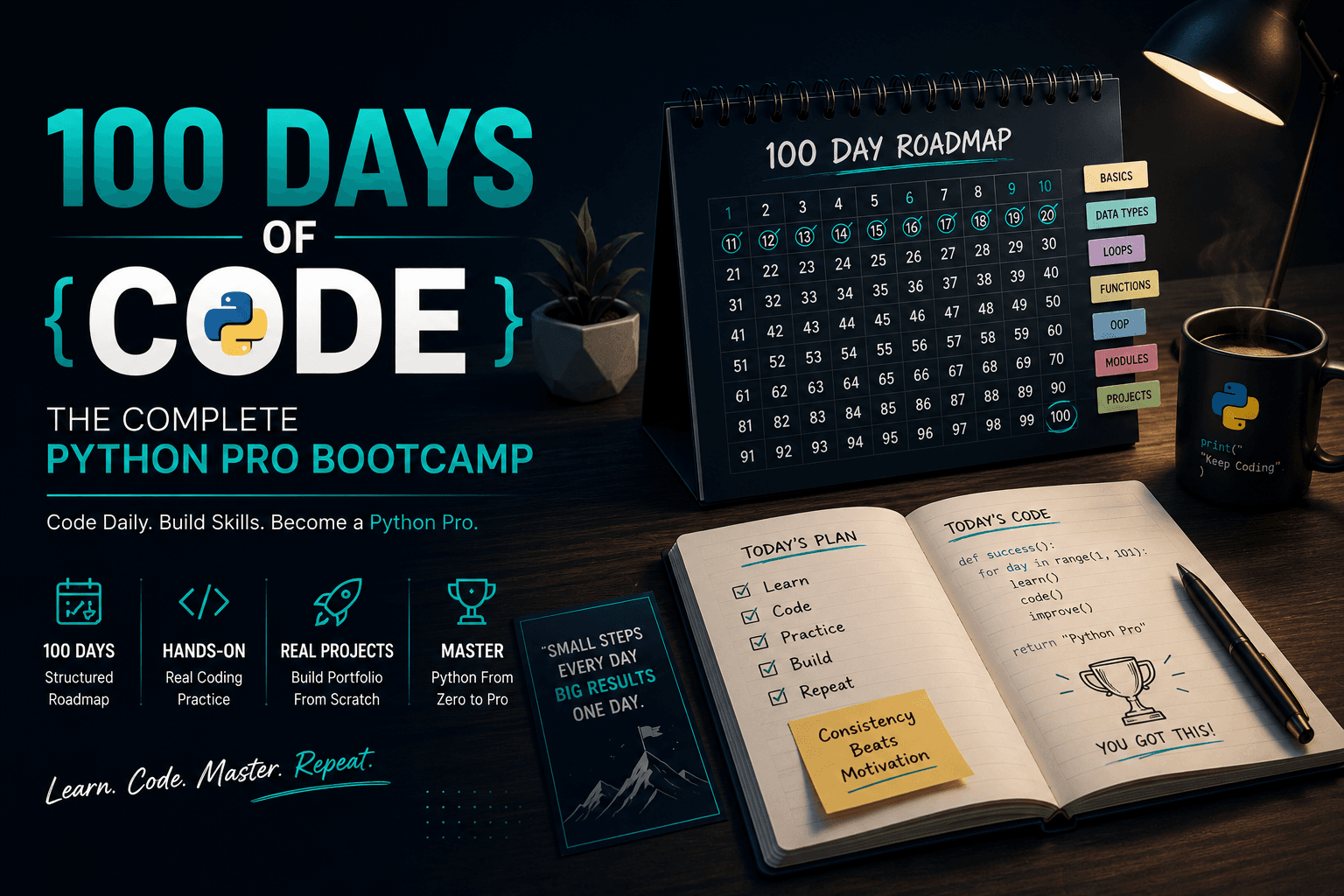
100 Days of Code: The Complete Python Pro Bootcamp
Become a Python programmer and learn one of employer's most requested skills of 2026! This is the most comprehensive, yet straight-forward, course for the Python programming language. We take you from beginner to professional. Whether you want to build websites, analyze data, create games, automate tasks, or become an AI/ML engineer - this course will teach you Python from scratch.