Learn. Grow. Succeed.Your Future Starts Here
Access expert-crafted courses across 6+ categories and gain skills that help you advance your career.
Browse by Category
Automation in Manufacturing: Flow Lines & Assembly Systems
This course covers the fundamentals of industrial automation, including fixed, programmable, and flexible automation, automated flow lines, transfer mechanisms, and line balancing. Students will learn to analyze transfer line performance, apply upper and lower bound approaches, and understand storage buffers and partial automation. The course also includes practical problems and case studies to reinforce key concepts.
Open Source Licensing, PHP, MySQL & AJAX for Dynamic Web Development
This course covers open source and free software licensing, including copyright law and major licenses like GPL, Apache, and BSD. You'll learn PHP programming from basics to advanced object-oriented features, MySQL database connectivity, and AJAX for interactive web applications. The course also introduces GitHub hosting and practical projects like file uploads and pagination.
Data Structures Using Python (R20A0503)
Master fundamental data structures using Python, from OOP concepts and arrays to linked lists, stacks, queues, graphs, and trees. This course covers implementation, operations, and algorithmic thinking for efficient problem-solving. Ideal for B.Tech CSE students building a strong foundation in data structures.
Competitive Programming: Basic Techniques and Algorithms
This course covers the fundamental techniques and algorithms needed for competitive programming. You will learn essential C++ features, time complexity analysis, sorting, binary search, data structures, complete search, and greedy algorithms. Through practical examples and efficiency comparisons, you'll develop the skills to solve algorithmic problems efficiently.
Introduction to Programming and Computer Science with Python
Learn the foundations of computer science and programming using Python. Starting from the Python shell and basic types, you'll progress through functions, branching, loops, file I/O, data analysis, and graphs. Designed for beginners, this course builds structured problem-solving skills through hands-on practice and exercises.
Flutter App Development: Build Music, Ecommerce & API-Driven Apps
This hands-on course teaches you to build real Flutter applications from scratch. You'll set up your development environment, work with packages, play audio from local and external storage, create a music player UI, build an ecommerce app, and integrate REST APIs with HTTP requests. You'll also learn essential debugging techniques and performance optimization for Flutter apps.
Shopify Store Setup: From Import to Launch and Marketing
Learn how to build and launch a complete Shopify online store from scratch. This course walks you through account setup, adding products and collections, customizing themes, configuring shipping, payments, and taxes, then testing, launching, and marketing your store. Perfect for beginners ready to sell online.
Angular 8: Complete Framework Guide with Hands-On ExpenseManager
Master Angular 8 from the ground up by building a real-world ExpenseManager application. Learn TypeScript-based components, templates, data binding, directives, pipes, reactive programming, dependency injection, HTTP client programming, Angular Material, and routing. This course combines core concepts with practical examples to help you build modern web and mobile applications.
Angular 8: Building Web Applications from Basics to HTTP
Learn Angular 8 from the ground up, starting with installation and architecture, then moving through data binding, directives, pipes, reactive programming, dependency injection, and HTTP client programming. Build a real ExpenseManager application while mastering components, templates, services, and routing. This course equips you with the skills to develop modern, full-stack web applications using Angular.
Spring Boot: Building a Production-Grade REST API with Security and PostgreSQL
Learn to build a real-world Spring Boot application from the ground up. This course covers user management, OAuth2 security, REST controllers, API documentation, and connecting to a PostgreSQL database. By the end, you'll have the skills to create stand-alone, production-ready Spring Boot applications.
Node.js: Build a Weather App from Scratch
Learn Node.js by building a real-world weather application. Start with the basics of Node.js, modules, and npm, then master asynchronous programming, HTTP requests, and Express. Finish by deploying your app with Git and Heroku.
Microservice Architecture: Design Principles and Practices
Learn a goal-oriented, design-based approach to microservice architecture. This course covers the principles and practices for building scalable, resilient systems, including the microservices value proposition, design principles, and strategies for adopting microservices in your organization.
Git Version Control: From Basics to Internals
This course provides a comprehensive introduction to Git, covering installation, basic commands, configuration, and the underlying object model. You'll learn how to create repositories, manage files, make commits, and understand Git's content-addressable storage. By the end, you'll have a solid foundation in using Git for version control and a deeper understanding of its internals.
Refactoring: Improving the Design of Existing Code
Learn the art and science of refactoring from Martin Fowler's classic guide. This course covers how to identify bad code smells, apply refactorings safely with tests, and improve software design without changing external behavior. You'll work through practical examples and principles to make code easier to understand and maintain.
Functional Programming: Principles and Practice
This course introduces functional programming using a clear, mathematical approach. You will learn fundamental concepts such as expressions, types, functions, and recursion, and explore basic data types including numbers, booleans, characters, lists, and trees. The course also covers program efficiency, infinite lists, and reasoning about programs, providing a solid foundation for writing correct and efficient functional code.
SDLC Methodologies: From Waterfall to Agile
This course explores the major Software Development Life Cycle (SDLC) methodologies used in Information Systems project management. You will examine the characteristics, advantages, and disadvantages of Waterfall, Spiral, Hybrid, Iterative, Incremental, Prototyping, RAD, and Agile approaches, including Scrum, Kanban, Crystal, and FDD. You will also learn to compare traditional and Agile methods and use a decision support matrix to select the right methodology for a project.
Test-Driven Development By Example: A Practical Guide
Learn Test-Driven Development (TDD) through Kent Beck's classic examples. This course covers the TDD cycle, multi-currency money, equality, refactoring, testing patterns, and building a testing framework. You'll gain hands-on experience with iterative design and test-first programming.
Go Programming: Environment Setup, Language Basics, and Web Foundations
Learn to set up a Go development environment, master Go's core syntax and features including variables, control structures, functions, methods, interfaces, and concurrency, and understand the fundamentals of web development with Go. This course provides a solid foundation for building efficient and scalable applications.
Qualitative Research Methods: Fieldwork, Interviewing, and Analysis
This course provides a comprehensive introduction to qualitative research methodology, from entering the field and building relationships to conducting in-depth interviews, analyzing data, and writing up findings. You will learn participant observation, interviewing techniques, data analysis strategies like coding and analytic induction, and how to present qualitative research through published studies. Ideal for students and researchers in the social sciences.
C# and .NET Framework: From Basics to Windows Applications
This course covers the C# programming language and the .NET Framework, starting from core syntax, data types, operators, and control flow, then moving into object-oriented programming with classes, methods, constructors, inheritance, polymorphism, interfaces, and delegates. It also introduces exception handling and Windows Forms application development with controls and events. Students gain practical skills to build console and desktop applications in C#.
Survey Design and Methodology: From Planning to Sampling
Learn how to design, conduct, and evaluate surveys with confidence. This course covers survey purposes, study design types, questionnaire construction, sampling methods, sources of bias, and the validity and reliability of survey measures. You'll also explore privacy and ethics in survey research and examine real-world survey examples.

Research Ethics and Academic Integrity: From Predatory Journals to Plagiarism
This course explores the principles of research ethics and academic integrity, covering the emergence of predatory journals, UGC-CARE measures, research misconduct (fabrication, falsification, plagiarism), and ethical considerations in qualitative and social science research. Students will learn to identify unethical practices, apply preventive measures, and uphold integrity in their own research and publishing.
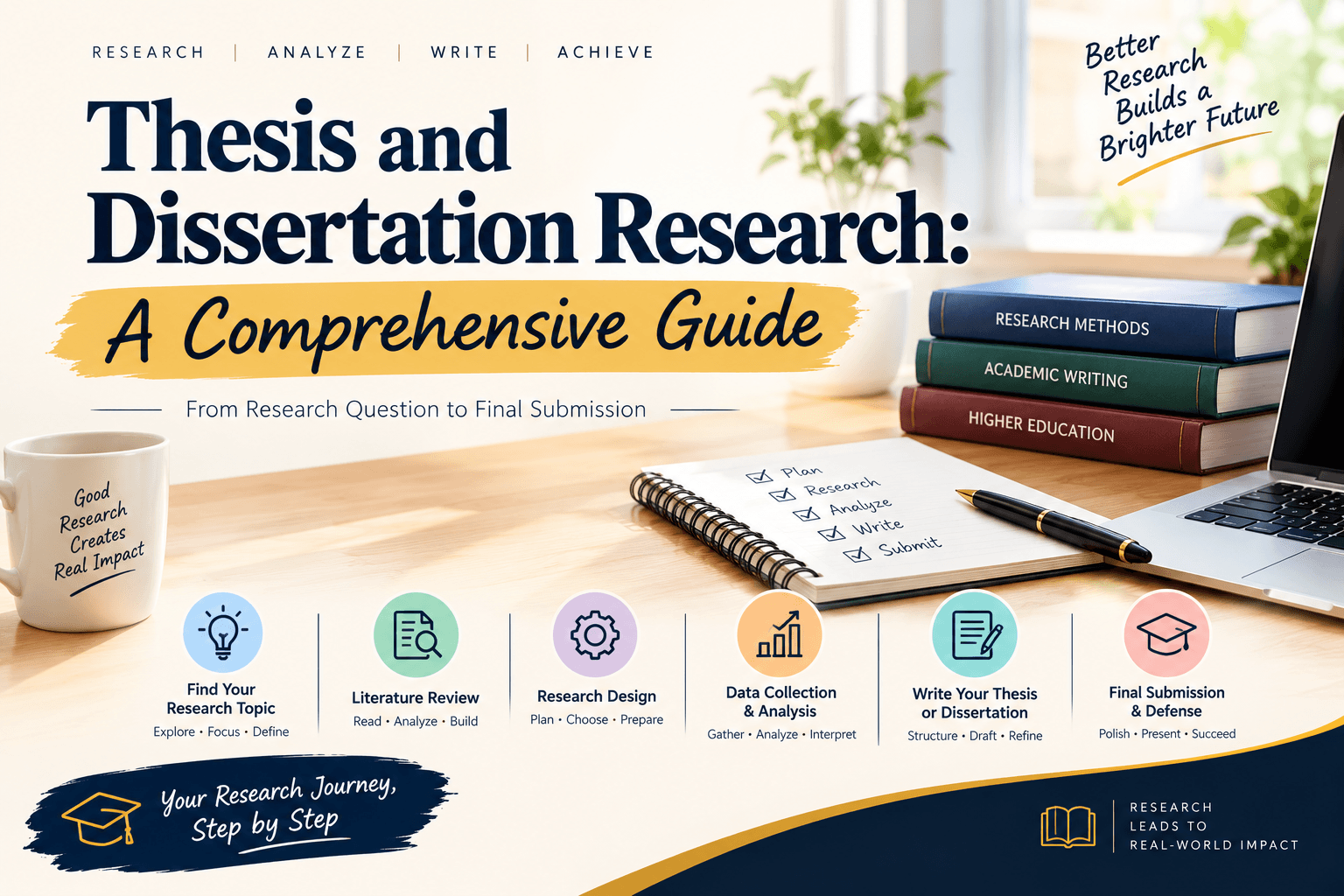
Thesis and Dissertation Research: A Comprehensive Guide
This course provides a thorough guide to planning, conducting, and completing thesis and dissertation research. It covers the historical context of advanced degrees, the distinction between honors, master's, and doctoral work, qualitative research methods, advisor selection and roles, and the responsibilities of students and faculty. Students will learn to create a personal time line, understand scholarly standards, and navigate the T/D process effectively.
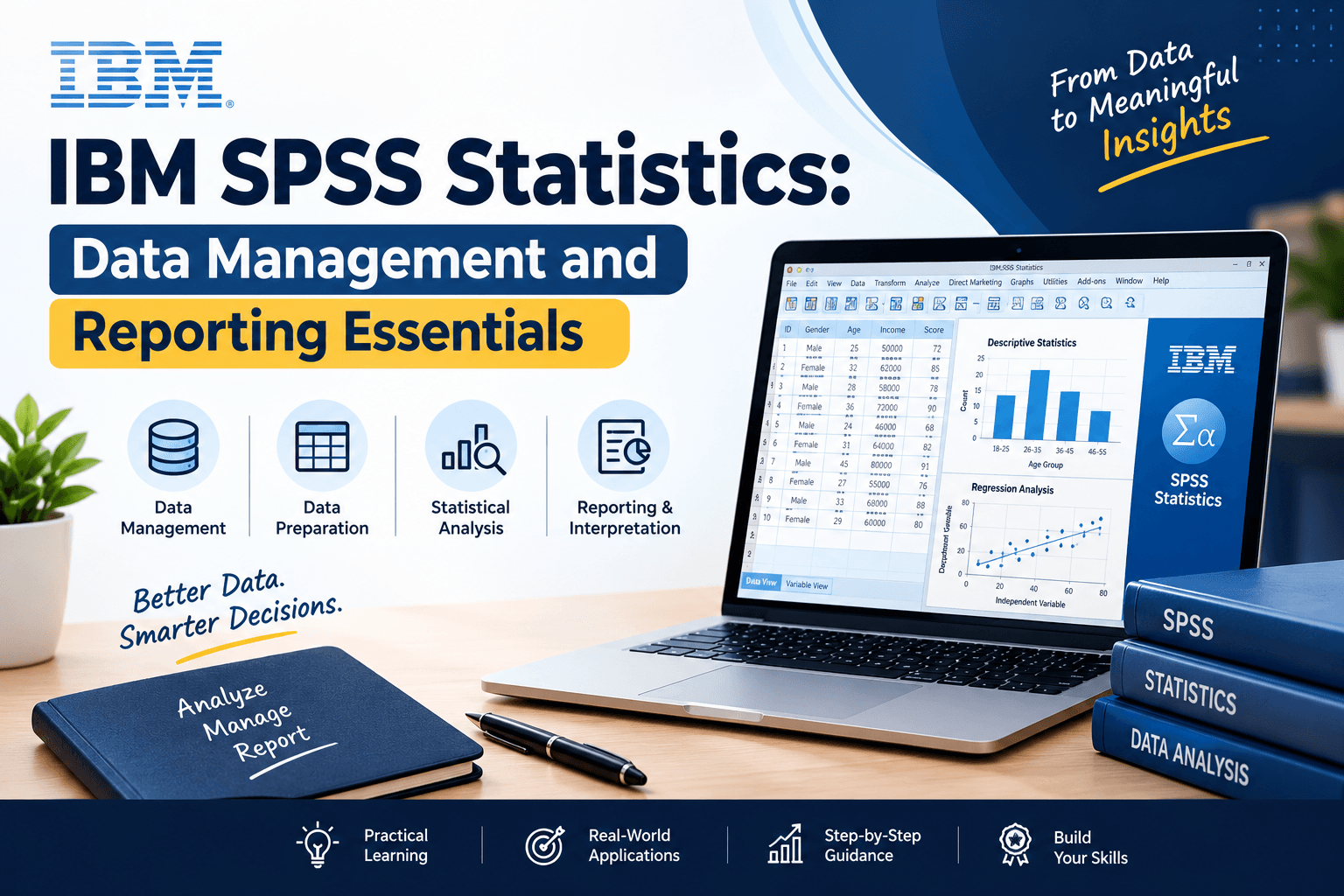
IBM SPSS Statistics: Data Management and Reporting Essentials
Learn to use IBM SPSS Statistics for data entry, import, transformation, and reporting. This course covers reading data from Excel, databases, and text files; editing and labeling variables; computing new variables; sorting and selecting cases; creating and editing charts; and working with output and syntax. Ideal for beginners seeking practical data analysis skills.
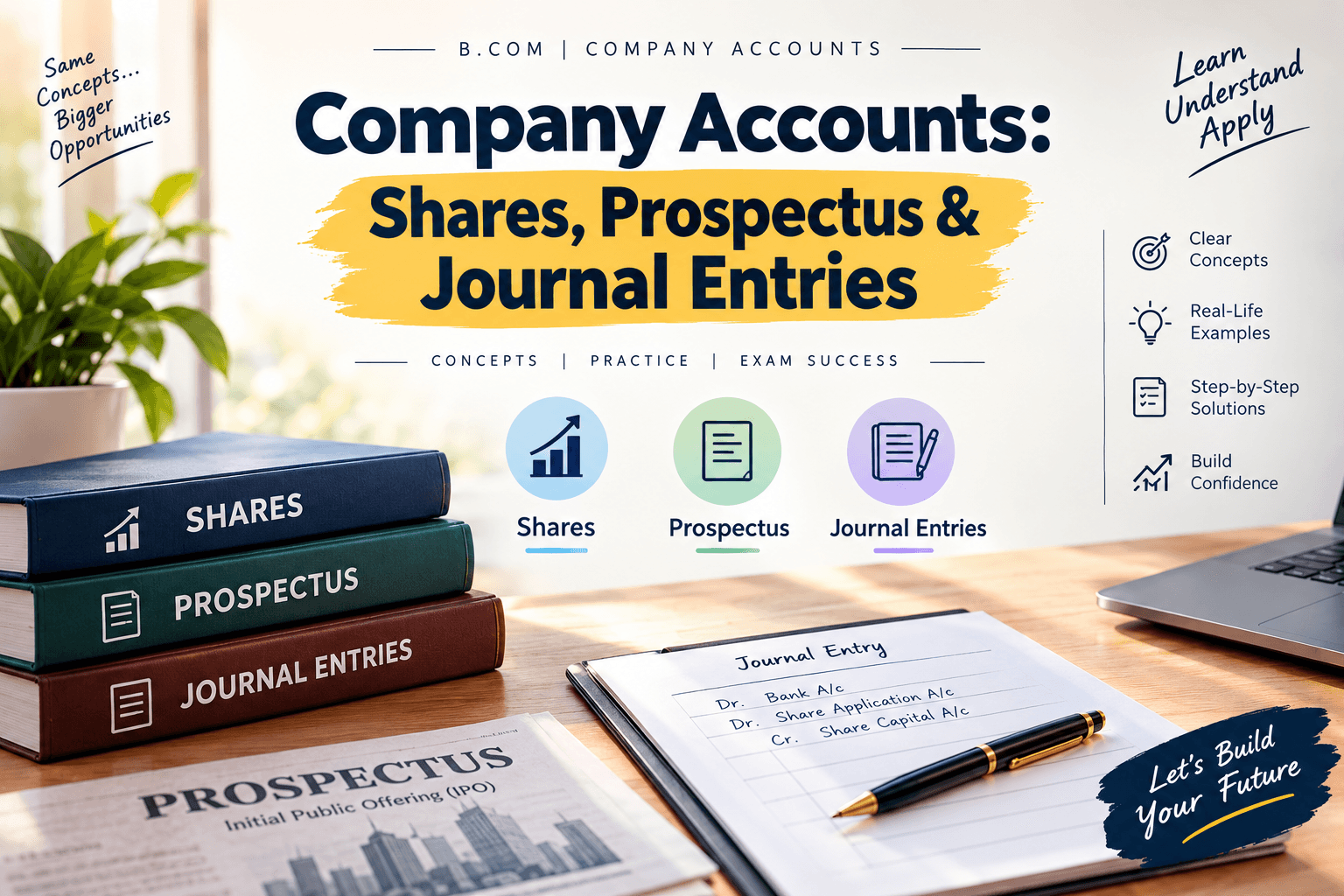
Company Accounts: Shares, Prospectus & Journal Entries
Master the fundamentals of company accounting, from incorporation and prospectus to share issuance and forfeiture. Learn to record journal entries for shares issued at par, premium, and discount, handle calls-in-arrear and calls-in-advance, and prepare related financial records. This course is ideal for accounting students and professionals seeking practical expertise in corporate accounting.
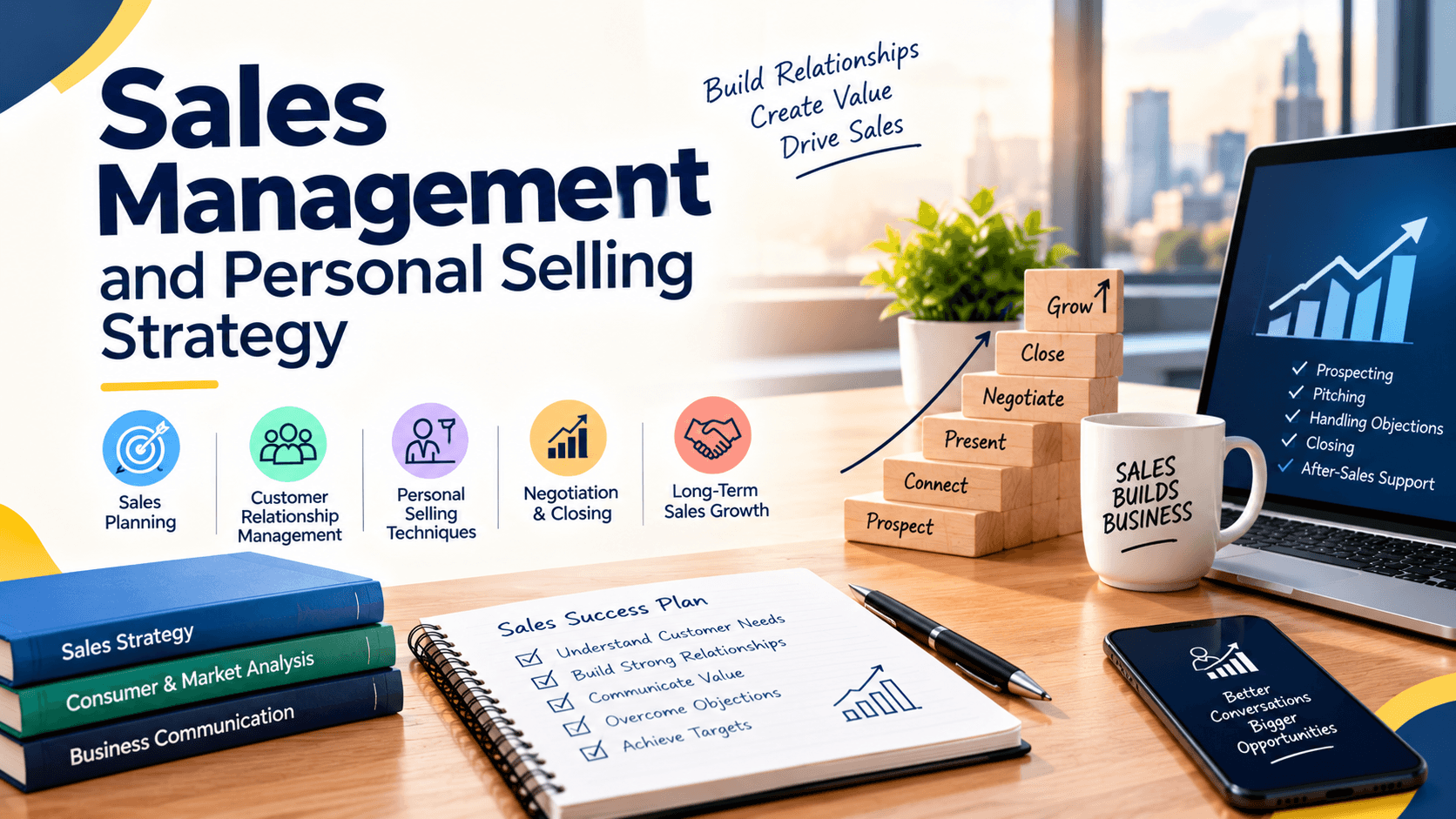
Sales Management and Personal Selling Strategy
This course explores how sales executives plan, organize, staff, direct, and control the personal-selling effort. You will learn to set selling objectives, design sales strategies and policies, manage sales force activities such as training and compensation, and coordinate selling with broader marketing and distribution efforts.
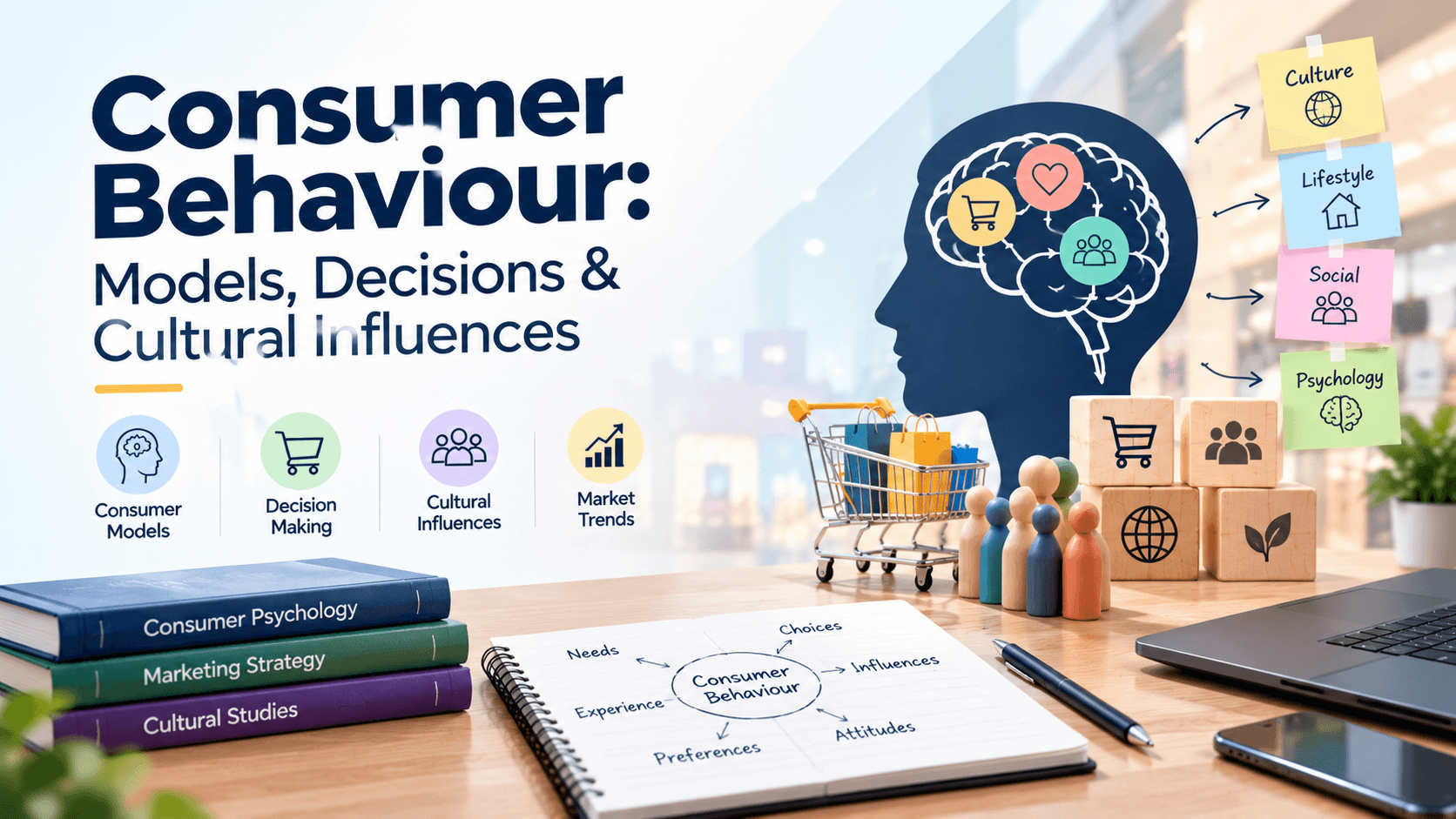
Consumer Behaviour: Models, Decisions & Cultural Influences
This course explores how consumers make buying decisions and how marketers can respond. You will examine consumer involvement, decision-making processes, behaviour models, and the cultural and environmental forces shaping purchase behaviour. Ideal for students and professionals seeking a practical grounding in consumer behaviour and its marketing implications.
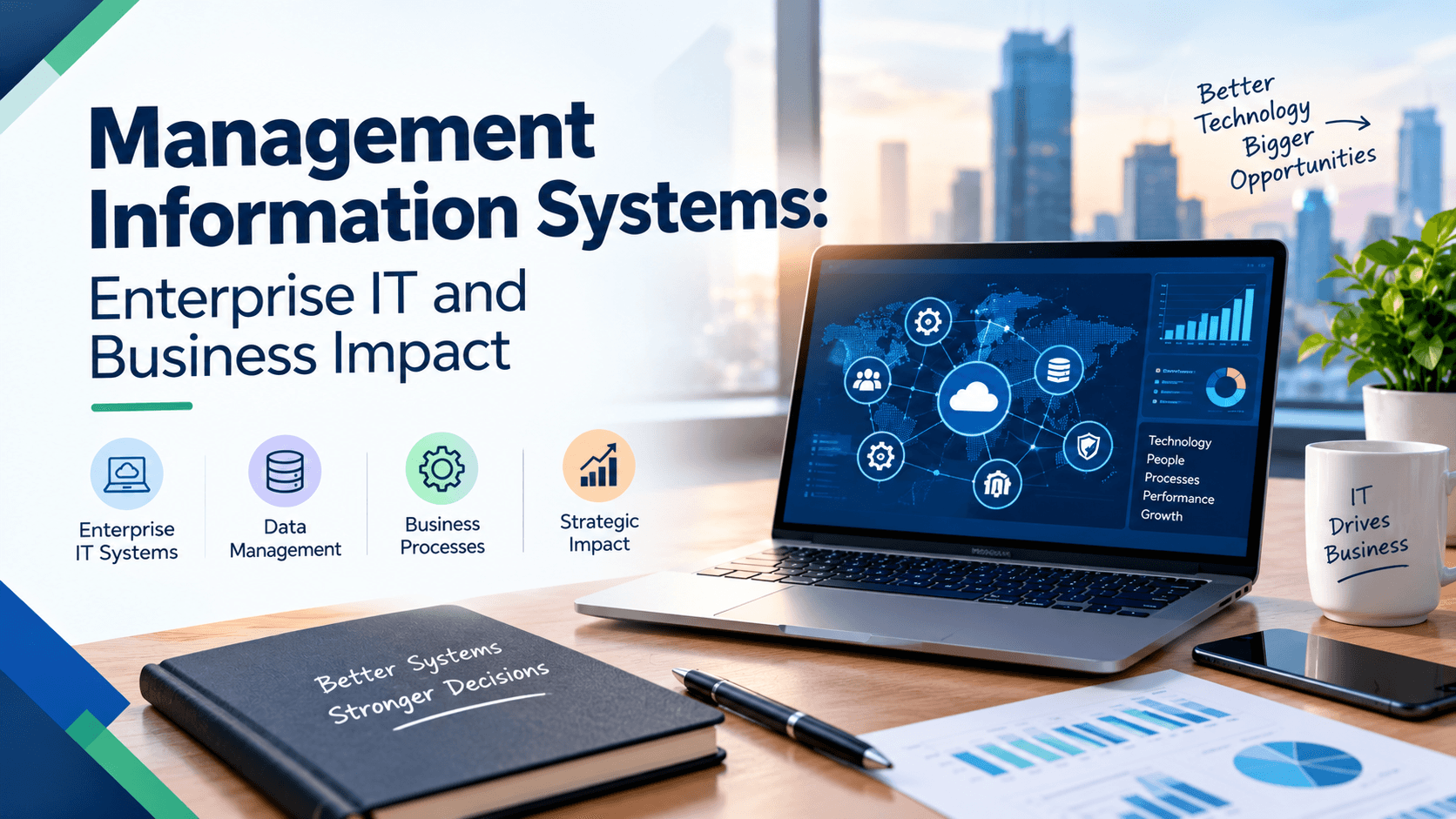
Management Information Systems: Enterprise IT and Business Impact
This course explores how organizations use information systems to support operations, decision-making, and strategy. Students will learn about transaction processing, decision support, executive support, and enterprise systems, along with the economic, organizational, and behavioral impacts of information technology. It also covers competitive strategy, global business challenges, and IT-induced business transformation.
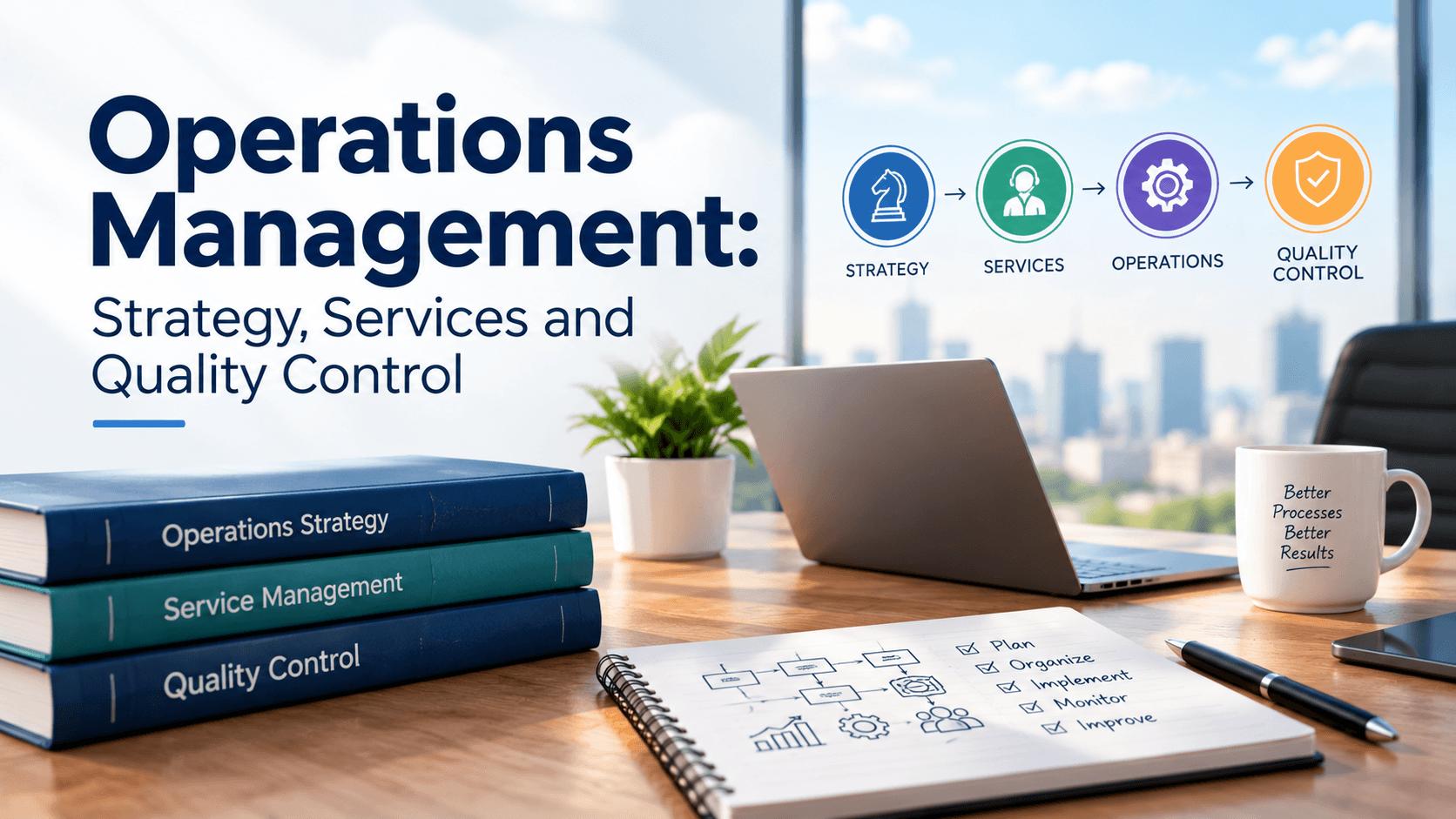
Operations Management: Strategy, Services and Quality Control
This course introduces the fundamentals of operations management, from its historical evolution and value chain model to competitive strategy, service characteristics, and quality control. You'll explore how productive systems transform inputs into value for customers, how firms translate strategy into operational effectiveness, and how statistical process control and service quality frameworks are applied in practice.
Business Research Methods: A Complete Guide for Students
This course guides you through the full research process for business and management, from generating research ideas and choosing a philosophy to collecting, analyzing, and reporting data. Based on the ninth edition of the leading textbook, it covers qualitative and quantitative methods, sampling, interviews, thematic analysis, and academic writing. You will learn to design and conduct a rigorous research project, such as a dissertation, and to justify your methodological choices.
Financial Management: Time Value of Money and Financial Decisions
This course introduces the core principles of financial management, covering profit versus wealth maximization, the finance function, and business organization forms. You will learn time value of money concepts including present and future value, annuities, and perpetuities, and explore long-term and short-term sources of finance such as equity, debentures, and trade credit. Real-world cases and managerial problems help you apply these tools to financial decisions.
Human Resource Management: Planning, Job Analysis and HR Functions
This course covers the nature and scope of human resource management, including its historical evolution, functions, and strategic role. You will learn human resource planning processes, job analysis techniques, and how to align HR practices with organizational goals. The course also addresses contemporary issues such as globalization, workforce diversity, and work-life balance.
Cost and Management Accounting: Concepts and Techniques
Master cost and management accounting with this comprehensive course. Learn cost classification, overhead allocation, job and contract costing, marginal costing, budgetary control, and standard costing. Apply these techniques to real-world business decisions and financial planning.
Business Law: Indian Contract Act and Special Contracts
This course covers the Indian Contract Act, 1872, including essential elements of a valid contract, offer and acceptance, capacity to contract, discharge of contracts, remedies for breach, and special contracts like bailment. Students will learn through case studies and practical examples to understand legal principles governing business agreements.
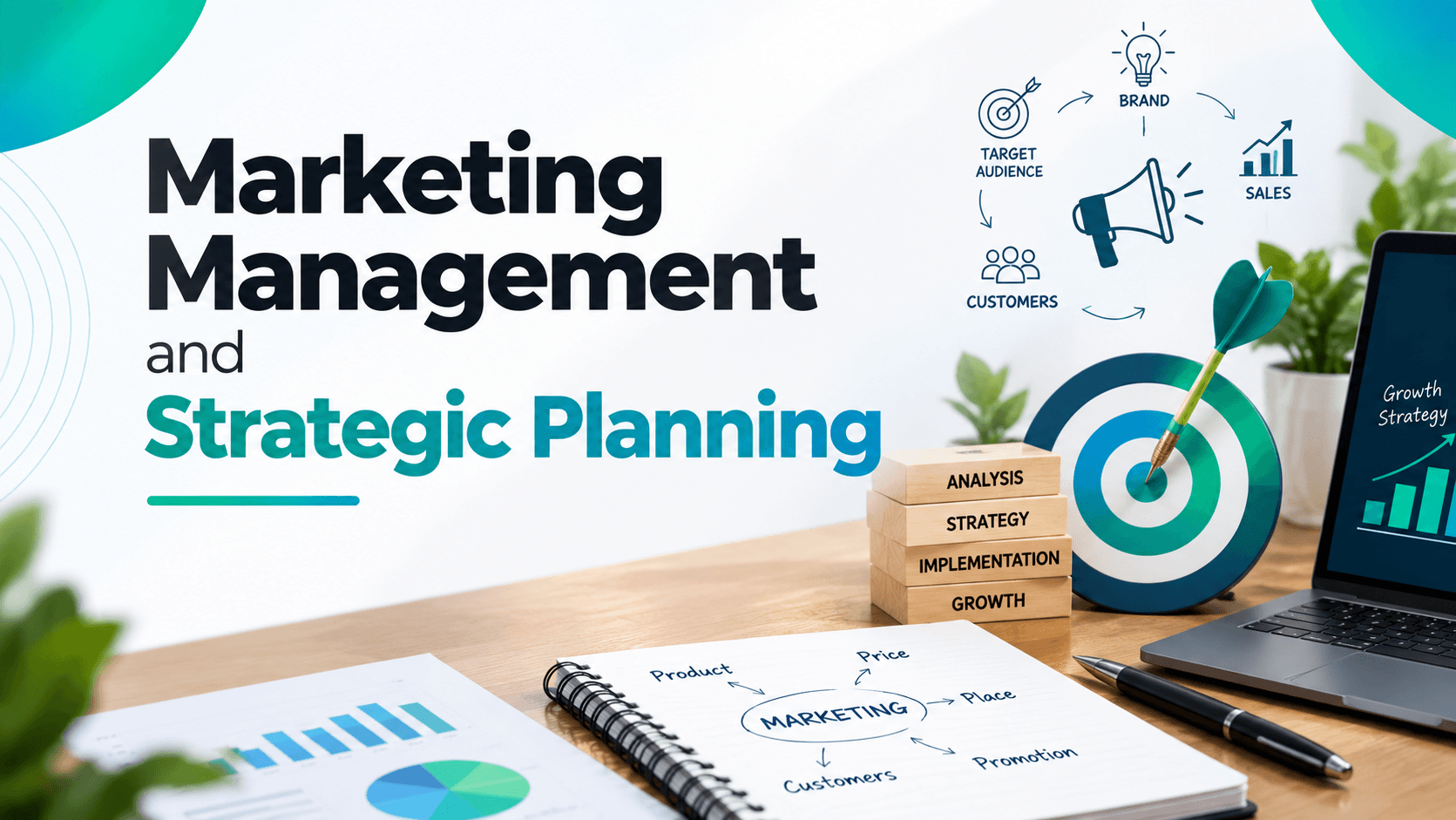
Marketing Management and Strategic Planning
This course introduces the fundamentals of marketing, from the meaning and scope of markets and marketing to customer needs, the marketing mix, and the marketing concept. It then explores strategic planning, strategic business units, situation analysis, and the environmental factors that shape marketing decisions. Students gain a practical foundation in marketing strategy and planning.
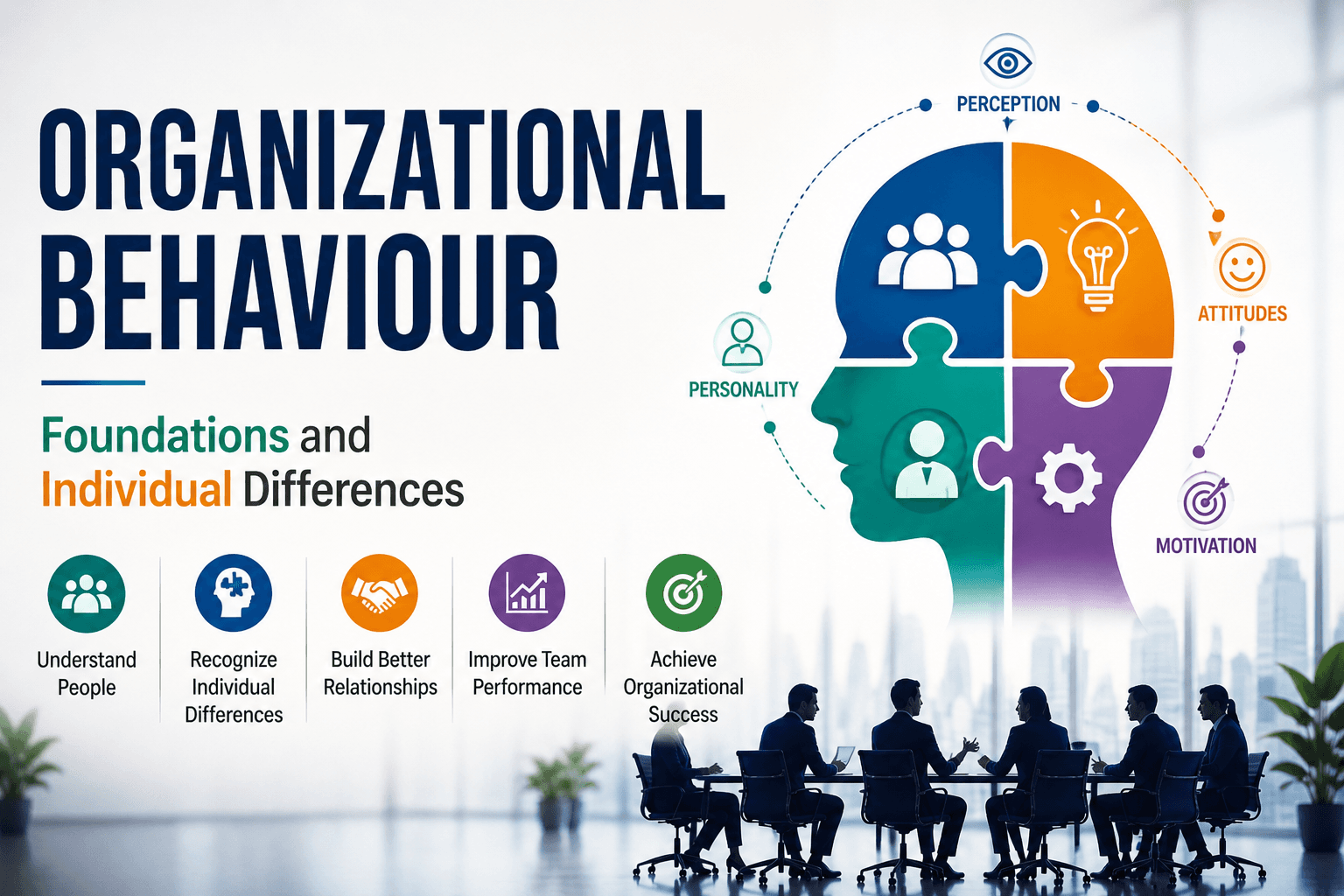
Organizational Behaviour: Foundations and Individual Differences
This course explores the essentials of organisational behaviour, covering individual, group, and organisational dynamics. You will learn about personality, learning theories, values, motivation, and management functions to understand and predict human behaviour in organisations. The course also addresses contemporary challenges such as globalization, workforce diversity, and ethical behaviour.
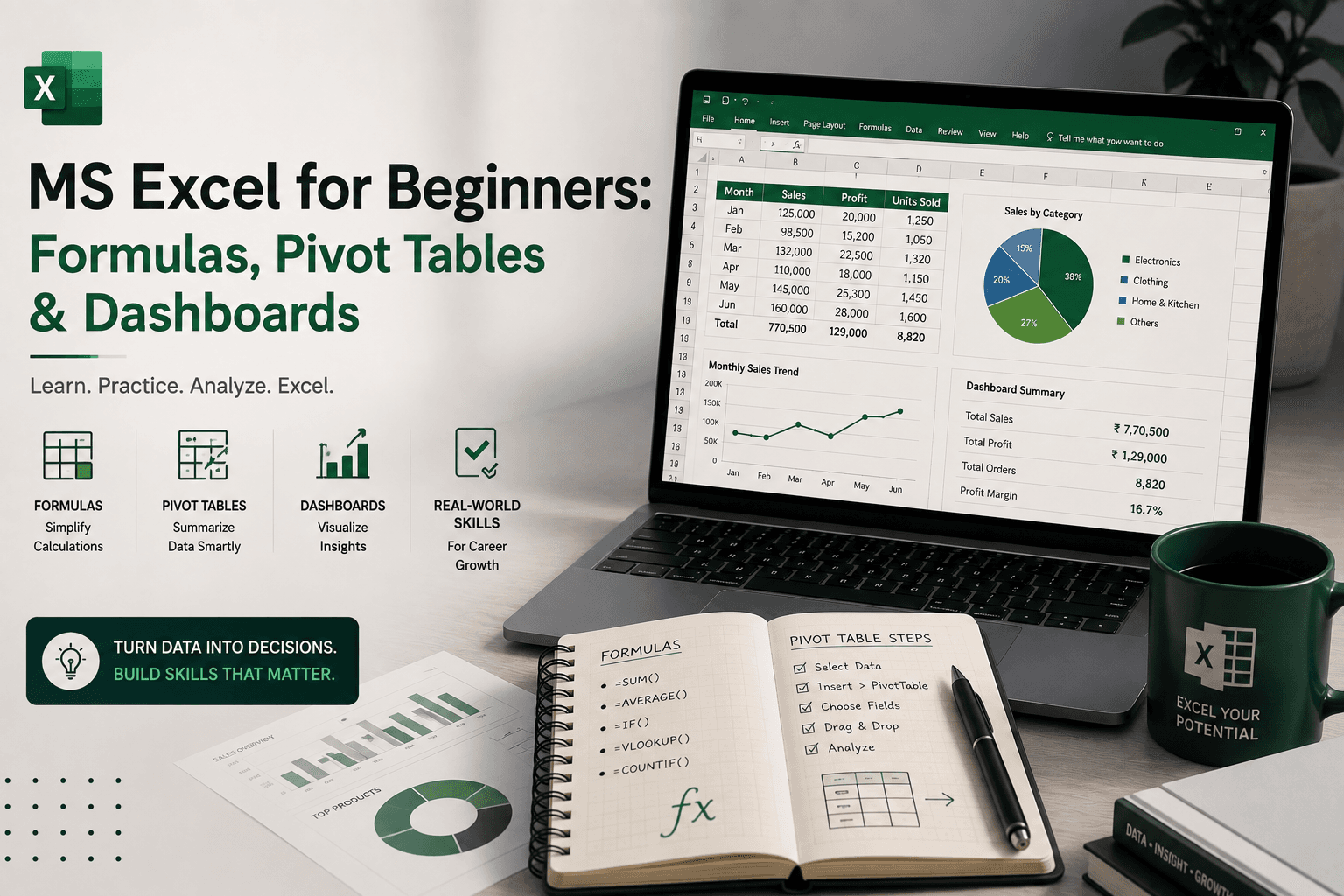
MS Excel for Beginners: Formulas, Pivot Tables & Dashboards
Master Microsoft Excel from absolute zero to professional-level data analysis and dashboard creation. Learn formulas, functions, lookups, data cleaning, Pivot Tables, charts, interactive dashboards, shortcuts, and real-world spreadsheet workflows through hands-on practice.

NISM Series-I: Currency Derivatives — Complete Exam Preparation
Master the NISM-Series-I: Currency Derivatives Certification Examination with a structured, exam-focused course designed to build both conceptual understanding and calculation skills.This course covers the complete syllabus, including currency markets, foreign exchange derivatives, exchange-traded currency futures, currency options, hedging strategies, trading mechanisms, clearing and settlement, risk management, regulatory framework, accounting, taxation, and investor protection.You will learn through practical Indian-market examples, step-by-step calculations, payoff analysis, formula-based learning, and exam-style MCQs. Special attention is given to high-weightage areas such as Currency Futures and Currency Options, which together account for 40% of the examination.The course also prepares you for the exam's 100 questions, 2-hour duration, 60% passing requirement, and 25% negative marking, helping you develop the right strategy for attempting questions confidently.Important: This is a preparation course and does not itself award the NISM certification. The certification examination must be taken separately through NISM.

Securities Markets Foundation — From Zero to Smart Investor (Indian Edition)
Securities Markets Foundation — From Zero to Smart Investor (Indian Edition) is a comprehensive beginner-friendly course designed to help you understand the fundamentals of the Indian securities market. Whether you're a student, working professional, or first-time investor, this course provides the knowledge and confidence needed to start your investment journey.You will learn how the Indian stock market operates, the roles of SEBI, NSE, BSE, brokers, and depositories, and how to invest using a Demat and trading account. The course also covers essential investment products such as stocks, mutual funds, ETFs, bonds, and derivatives, along with practical concepts like market orders, portfolio diversification, and risk management.By the end of this course, you'll be able to understand market movements, make informed investment decisions, avoid common beginner mistakes, and build a strong foundation for long-term wealth creation in the Indian securities market. No prior finance or investing experience is required—just a willingness to learn.
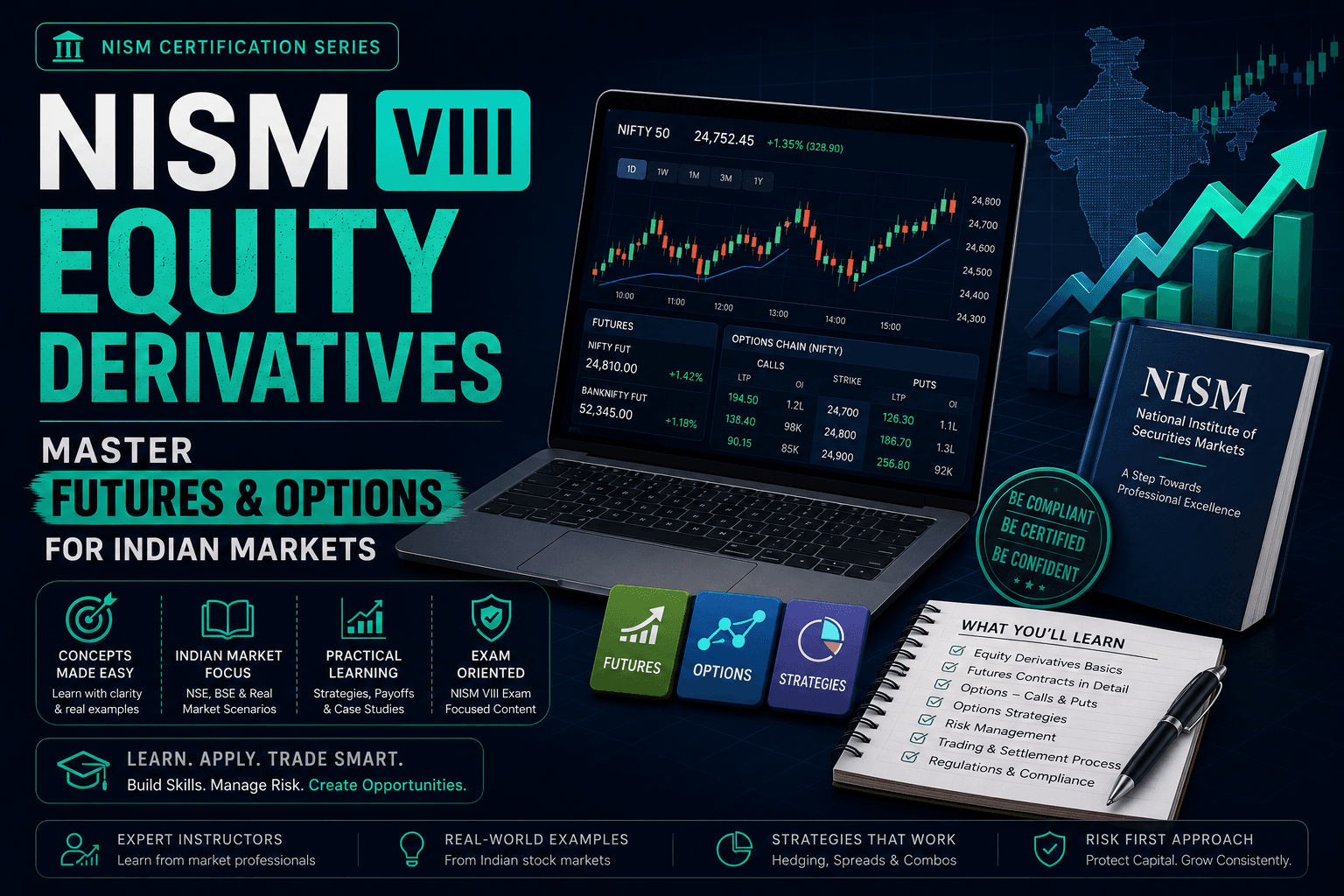
NISM VIII Equity Derivatives: Master Futures & Options for Indian Markets
This course is your complete guide to cracking the NISM Series VIII exam and becoming a confident F&O trader in Indian markets. Designed for stock broking aspirants, finance graduates, and intermediate traders, it covers everything from basic derivatives to advanced options strategies with real Indian examples. You'll learn how to read option chains, manage margins, and avoid costly mistakes while earning ₹4-15 LPA in trading roles. No fluff, no US examples — pure Indian context with Zerodha, NSE, and SEBI rules.
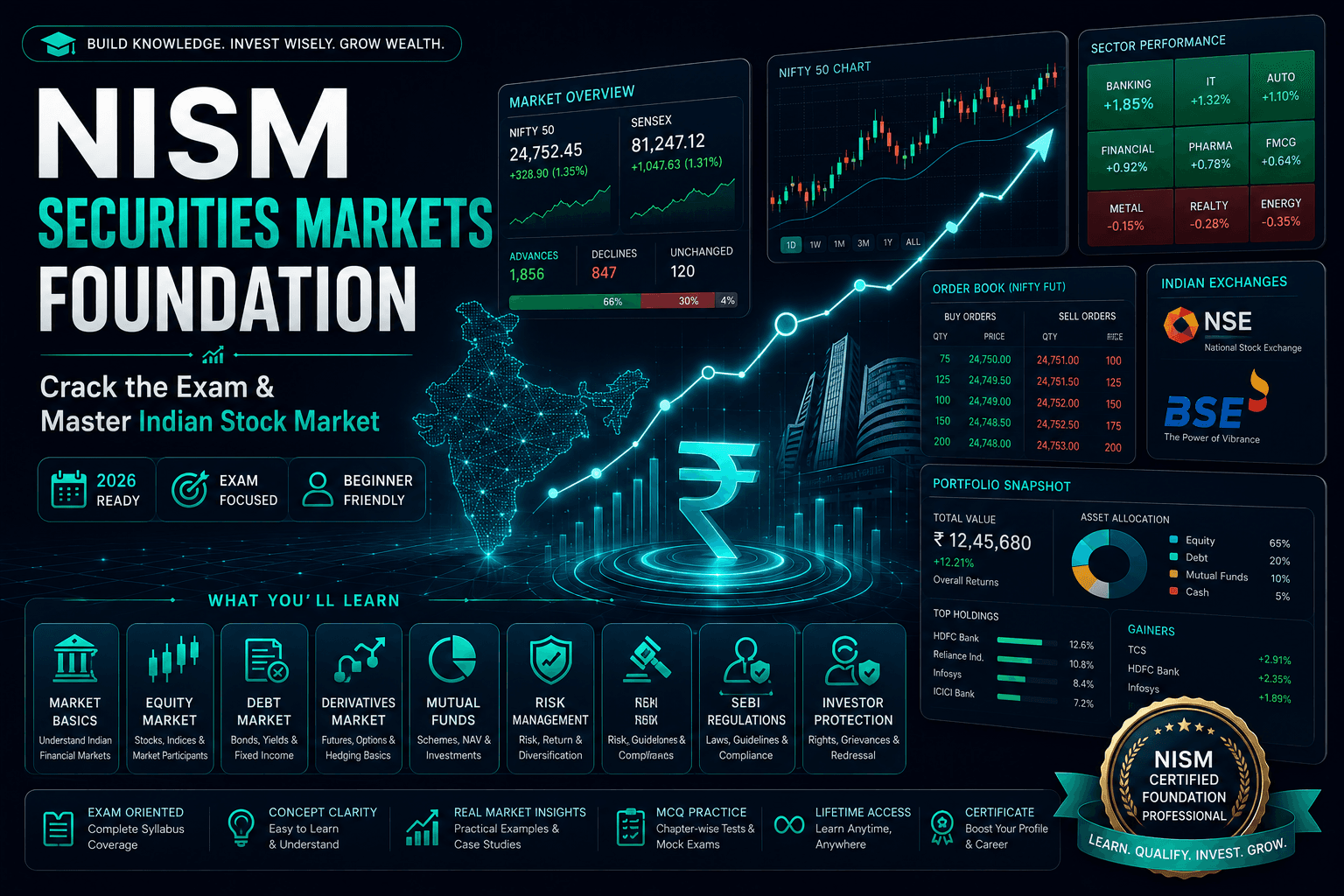
NISM Securities Markets Foundation: Crack the Exam & Master Indian Stock Market
This course is your complete guide to the Indian securities markets, designed for absolute beginners preparing for NISM Series XII certification or starting a career in finance. You'll learn how stocks, bonds, mutual funds, and IPOs work through real Indian examples (Zerodha, Groww, LIC IPO, Zomato IPO). By the end, you'll confidently read stock quotes, apply for IPOs, understand taxation, and build your first portfolio. No prior finance knowledge needed — we start from the ground up with Hinglish explanations, practical exercises, and exam-focused content.