Learn. Grow. Succeed.Your Future Starts Here
Access expert-crafted courses across 6+ categories and gain skills that help you advance your career.
Browse by Category
Academic Writing: Texts, Structure & Research Skills
This course develops the core skills of academic writing, from crafting thesis statements and topic sentences to structuring essays with clear introductions, bodies, and conclusions. You'll explore the major types of academic and factual texts, learn to read actively and critically, and discover key research resources including online databases, Shodhganga, and the National Digital Library of India.
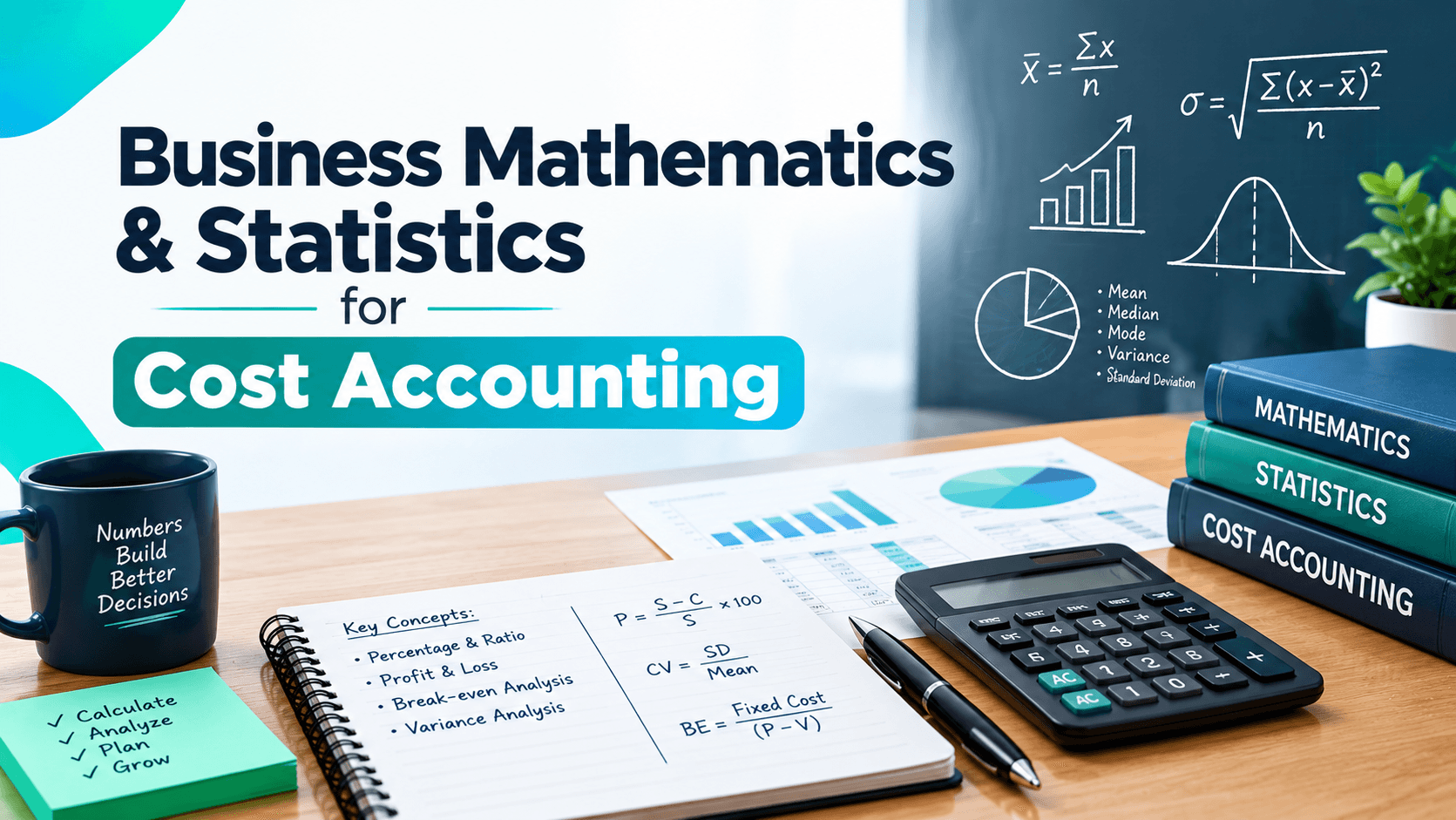
Business Mathematics & Statistics for Cost Accounting
Master fundamental statistical methods and business mathematics essential for cost accounting. Learn data representation, measures of central tendency and dispersion, correlation, regression, probability, and key mathematical tools including ratios, interest, progressions, set theory, and permutations. This course prepares you for professional examinations and practical application.
Business Communication Course for Beginners | Concepts, Methods & Workplace Skills
This course explores how communication works within business organizations and how it is changing. You will analyse communication models, verbal and non-verbal codes, language features, and social boundaries, using case studies and exercises to improve your own communication practice.
Principles of Management Complete Course | Fundamentals, Functions & Practices
This course introduces the fundamental concepts, principles, and practices of management. You will explore the historical evolution of management thought, from classical to modern approaches, and learn essential managerial functions such as planning, organizing, leading, and controlling. The course also covers ethics, social responsibility, and the skills required to be an effective manager.
Business Mathematics & Statistics | Fundamentals to Advanced
This course covers essential statistical methods for business and commerce, including measures of central tendency and dispersion, correlation and regression analysis, sampling techniques, and basic algebra with matrices. Students will learn to collect, analyze, and interpret data to make informed business decisions.
Microeconomics for Beginners | Complete Course
This course introduces the core principles of microeconomics, from the definition and scope of economics to the analysis of demand, supply, and market equilibrium. You will explore the laws of demand and supply, elasticity, pricing, and how these concepts inform managerial decision-making. Real-world case studies and examples help you apply economic reasoning to practical business situations.
Foundations of Business and Business Enterprises
This course introduces the fundamentals of Indian business, covering the meaning and characteristics of business, business objectives, and the evolution of India's economy through liberalization, privatization, and globalization. Students will also explore forms of business ownership, management functions, and organizational structures, along with topics like innovation, skill development, MSMEs, and corporate social responsibility.
Business Communication Skills | Theory and Practical Examples
This course explores how communication works within business organizations, covering process models, verbal and non-verbal codes, and the social and cultural factors that shape meaning. Students will learn to analyze communication situations, improve organizational communication, and apply practical strategies for effective business interactions.
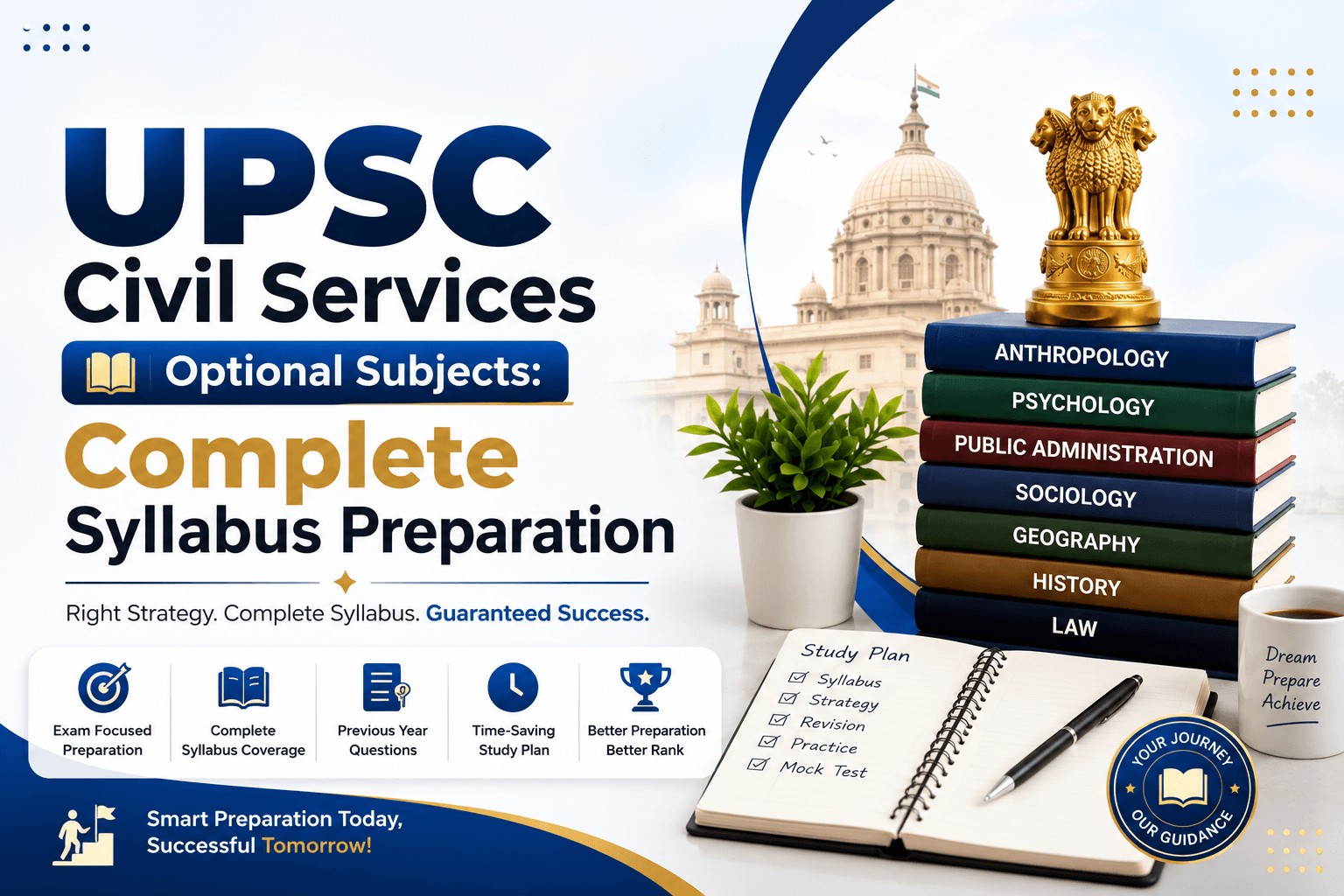
UPSC Civil Services Optional Subjects: Complete Syllabus Preparation
This comprehensive course covers the full UPSC Civil Services examination optional subject syllabi, spanning logical reasoning, Indian society, history, geography, botany, chemistry, economics, and a wide range of languages and literature. Students will study foundational concepts, paper structures, and prescribed texts across humanities, sciences, and regional language papers. It is designed to build the breadth and depth needed for competitive examination success.

Circular Packaging Design for Recycling: From Waste to Worth
This course is for packaging professionals, retailers, manufacturers, and sustainability managers in India's consumer goods sector who want to design packaging that actually gets recycled. You'll learn to apply a traffic-light system to evaluate and improve packaging designs, cut material costs by up to 20%, and comply with emerging EPR regulations. Through real Indian case studies — from Amul's milk pouches to Patanjali's shampoo bottles — you'll master mono-material design, barrier selection, and decoration choices that boost recyclability. Unlike generic global guidelines, this course is tailored for Indian recycling infrastructure and waste management realities.