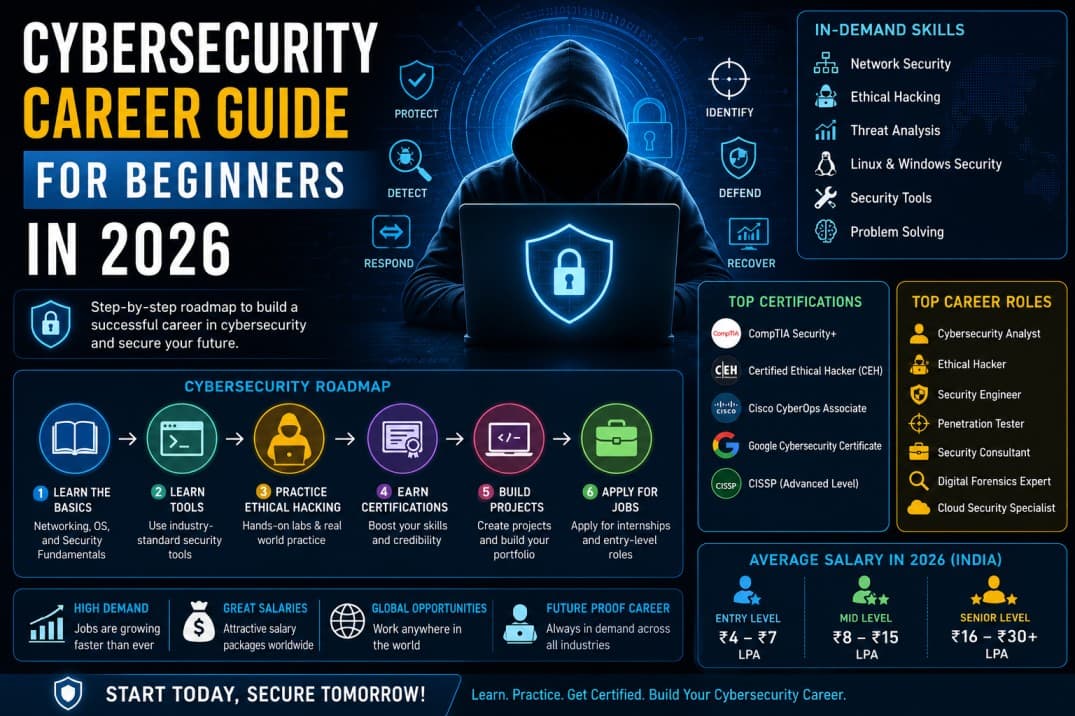
Cybersecurity Career Guide for Beginners in 2026
Cybersecuritycareer guide for beginners in 2026 is becoming one of the most searched topics among students and professionals interested in technology careers. As cyber threats continue to increase worldwide, companies are investing heavily in digital security and ethical hacking solutions.
Cybersecurity is the process of protecting systems, networks, applications, and data from cyberattacks. In 2026, cybersecurity professionals are expected to remain in high demand because businesses, banks, healthcare organizations, and government agencies rely on secure digital systems.
If you want a future-proof career with excellent salary opportunities and global demand, cybersecurity can be one of the best career options.
Why Choose Cybersecurity as a Career?
The cybersecurity industry is growing rapidly due to increasing cybercrime, data breaches, and online threats. Organizations need skilled professionals to secure their digital infrastructure and sensitive information.
Benefits of choosing cybersecurity include:
-
High salary packages
-
Strong future demand
-
Global job opportunities
-
Remote work options
-
Career growth and stability
-
Opportunities in ethical hacking and digital forensics
Many students are searching for a cybersecurity career guide for beginners in 2026 because cybersecurity jobs offer both technical challenges and long-term career growth.
Skills Required for Cybersecurity
To build a successful cybersecurity career, beginners should focus on these important skills:
1. Networking Fundamentals
Understanding computer networks is essential for cybersecurity professionals. Important topics include:
-
TCP/IP
-
DNS
-
Firewalls
-
VPN
-
Routing and Switching
Basic programming helps in understanding security vulnerabilities and automation.
Popular programming languages include:
-
Python
-
JavaScript
-
C++
-
Bash Scripting
3. Ethical Hacking
Ethical hacking involves identifying security weaknesses before attackers exploit them.
Important ethical hacking concepts include:
-
Penetration Testing
-
Vulnerability Assessment
-
Malware Analysis
-
Web Security Testing
4. Operating Systems
Cybersecurity professionals should understand:
-
Linux
-
Windows Security
-
Server Management
5. Problem Solving and Analytical Thinking
Cybersecurity experts analyze threats, investigate attacks, and create security solutions.
Best Cybersecurity Certifications for Beginners
Certifications help students validate their cybersecurity knowledge and improve job opportunities.
Popular beginner certifications include:
-
CompTIA Security+
-
Certified Ethical Hacker (CEH)
-
Cisco CyberOps
-
Google Cybersecurity Certificate
-
Certified Information Systems Security Professional (CISSP)
These certifications improve practical knowledge and industry credibility.
Step-by-Step Cybersecurity Roadmap
Step 1: Learn Networking Basics
Start with computer networks and internet security fundamentals.
Step 2: Understand Cybersecurity Concepts
Learn about cyber threats, malware, phishing, and system security.
Step 3: Practice Ethical Hacking
Use cybersecurity labs and practice environments to gain hands-on experience.
Step 4: Build Security Projects
Create projects such as:
-
Vulnerability scanners
-
Password security tools
-
Network monitoring systems
-
Security dashboards
Step 5: Earn Certifications
Industry certifications help improve your resume and technical knowledge.
Step 6: Apply for Internships and Jobs
Gain practical experience through internships, freelancing, and entry-level cybersecurity roles.
Career Opportunities in Cybersecurity
Cybersecurity professionals can work in different roles, including:
-
Cybersecurity Analyst
-
Ethical Hacker
-
Security Engineer
-
Penetration Tester
-
Security Consultant
-
Digital Forensics Expert
-
Cloud Security Specialist
These roles are available in IT companies, banks, government agencies, healthcare organizations, and multinational companies.
Salary of Cybersecurity Professionals in 2026
Cybersecurity remains one of the highest-paying technology fields globally.
Salary depends on:
-
Technical skills
-
Certifications
-
Experience
-
Company and location
Experienced cybersecurity professionals often receive premium salary packages due to the high demand for digital security experts.
Future Scope of Cybersecurity
The future of cybersecurity is extremely promising because businesses continue moving toward cloud computing, AI systems, and digital platforms.
Industries that require cybersecurity professionals include:
-
Banking
-
Healthcare
-
E-commerce
-
Government
-
Cloud Computing
-
Artificial Intelligence
This cybersecurity career guide for beginners in 2026 highlights the growing importance of cybersecurity professionals in protecting digital infrastructure worldwide.
Final Thoughts
Cybersecurity is one of the best future-ready careers for students interested in technology and digital security. By learning networking, ethical hacking, security tools, and practical cybersecurity skills, beginners can build a successful and rewarding career.
Choosing the right cybersecurity career guide for beginners in 2026 can help students understand the best learning roadmap, certifications, and career opportunities available in the cybersecurity industry.