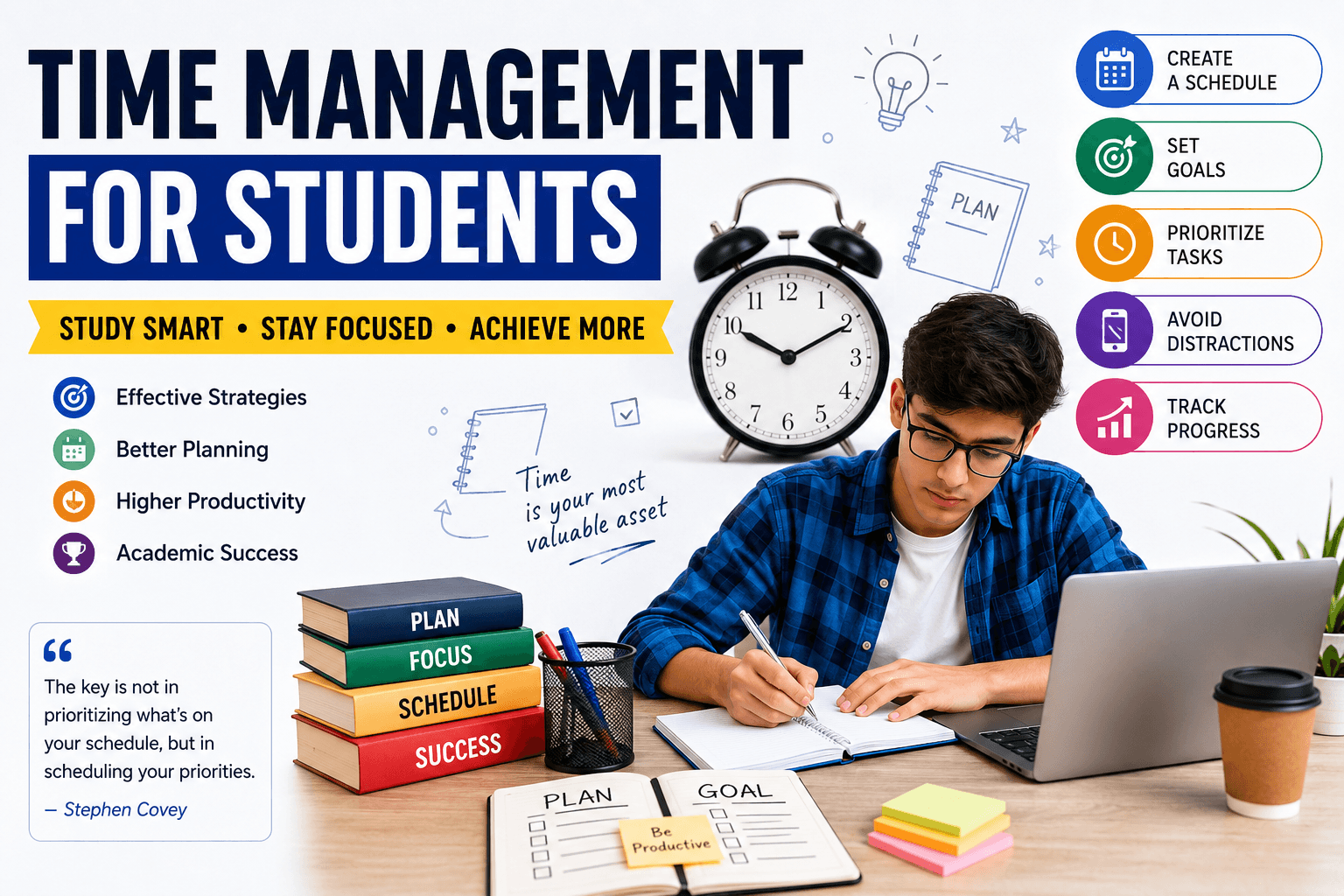
Time Management for Students: Complete Guide 2026
Time management for students is one of the most important skills for academic success and personal growth. Many students struggle to balance classes, assignments, exams, extracurricular activities, and personal responsibilities. Without proper planning, it becomes difficult to stay productive and achieve goals. Effective time management for students helps reduce stress, improve focus, and increase overall performance.
Why Time Management Matters for Students
Students often have multiple tasks to complete within a limited time. Good time management helps organise daily activities and ensures that important tasks receive proper attention.
Benefits of effective time management include:
-
Better academic performance
-
Reduced stress and anxiety
-
Improved productivity
-
Better work-life balance
-
More free time for hobbies and personal interests
Students who develop strong time management habits early often perform better in both academics and their future careers.
Common Time Management Challenges
Many students face similar challenges that affect productivity.
Procrastination
Delaying important tasks until the last minute can increase stress and reduce work quality.
Social Media Distractions
Platforms like Instagram, YouTube, and other entertainment apps can consume significant study time.
Poor Planning
Without a schedule, students often waste time deciding what to do next.
Multitasking
Trying to complete multiple tasks at once can reduce focus and efficiency.
Recognising these challenges is the first step toward improving
time management for students.
How to Create an Effective Study Schedule
A study schedule helps students stay organised and complete tasks on time.
Step 1: List All Tasks
Write down assignments, projects, exams, and other responsibilities.
Step 2: Set Priorities
Identify urgent and important tasks first.
Step 3: Allocate Study Time
Assign specific time slots for studying different subjects.
Step 4: Include Breaks
Regular breaks improve concentration and prevent mental fatigue.
Following a structured schedule is a proven method for improving time management for students.
The Pomodoro Technique
The Pomodoro Technique is one of the most effective productivity methods.
How It Works
-
Study for 25 minutes.
-
Take a 5-minute break.
-
Repeat the cycle four times.
-
Take a longer break of 15–30 minutes.
This method helps maintain focus and prevents burnout during long study sessions.
Setting SMART Goals
Successful students set clear and realistic goals.
SMART goals are:
-
Specific
-
Measurable
-
Achievable
-
Relevant
-
Time-Bound
Example:
Instead of saying, "I will study more," say, "I will study Mathematics for one hour every day this week."
Goal setting plays an important role in effective time management for students.
Best Apps for Time Management
Technology can help students stay organised and productive.
Google Calendar
Useful for scheduling classes, deadlines, and reminders.
Notion
Helps organise notes, tasks, and projects.
Todoist
A simple task management application.
Trello
Useful for planning projects and tracking progress.
Microsoft To Do
Helps create daily task lists and reminders.
Using these tools can significantly improve planning and organisation.
Managing Social Media Distractions
Social media is one of the biggest obstacles to productivity.
Students can reduce distractions by:
-
Turning off notifications
-
Using website blockers
-
Scheduling social media time
-
Keeping phones away during study sessions
-
Following a dedicated study routine
Managing distractions is essential for successful
time management for students.
Daily Habits of Successful Students
Highly productive students follow consistent habits.
Plan the Day in Advance
Prepare a task list before starting the day.
Study at Fixed Times
A routine improves discipline.
Take Regular Breaks
Short breaks improve concentration and learning efficiency.
Review Progress
Track completed tasks and identify areas for improvement.
Get Enough Sleep
Proper rest improves memory, focus, and academic performance.
Small daily habits often lead to significant long-term success.
Benefits of Effective Time Management
Students who manage their time effectively enjoy several advantages.
Improved Academic Results
Organised study sessions lead to better understanding and retention.
Reduced Stress
Planning prevents last-minute pressure.
Higher Productivity
Students complete more tasks in less time.
Better Confidence
Meeting deadlines builds confidence and motivation.
Stronger Career Preparation
Time management is a valuable skill that employers highly appreciate.
These benefits make time management for students an essential life skill.
Common Mistakes to Avoid
Students should avoid these mistakes:
-
Studying without a plan
-
Ignoring deadlines
-
Spending excessive time on social media
-
Skipping breaks
-
Multitasking frequently
Avoiding these habits can improve productivity and academic success.
Conclusion
Effective time management for students is not about studying all day. It is about using time wisely, setting priorities, and maintaining consistency. By creating a schedule, setting goals, avoiding distractions, and using productivity techniques like the Pomodoro Method, students can improve their academic performance and reduce stress. Developing strong time management habits today will benefit students throughout their education and future careers.