Introduction
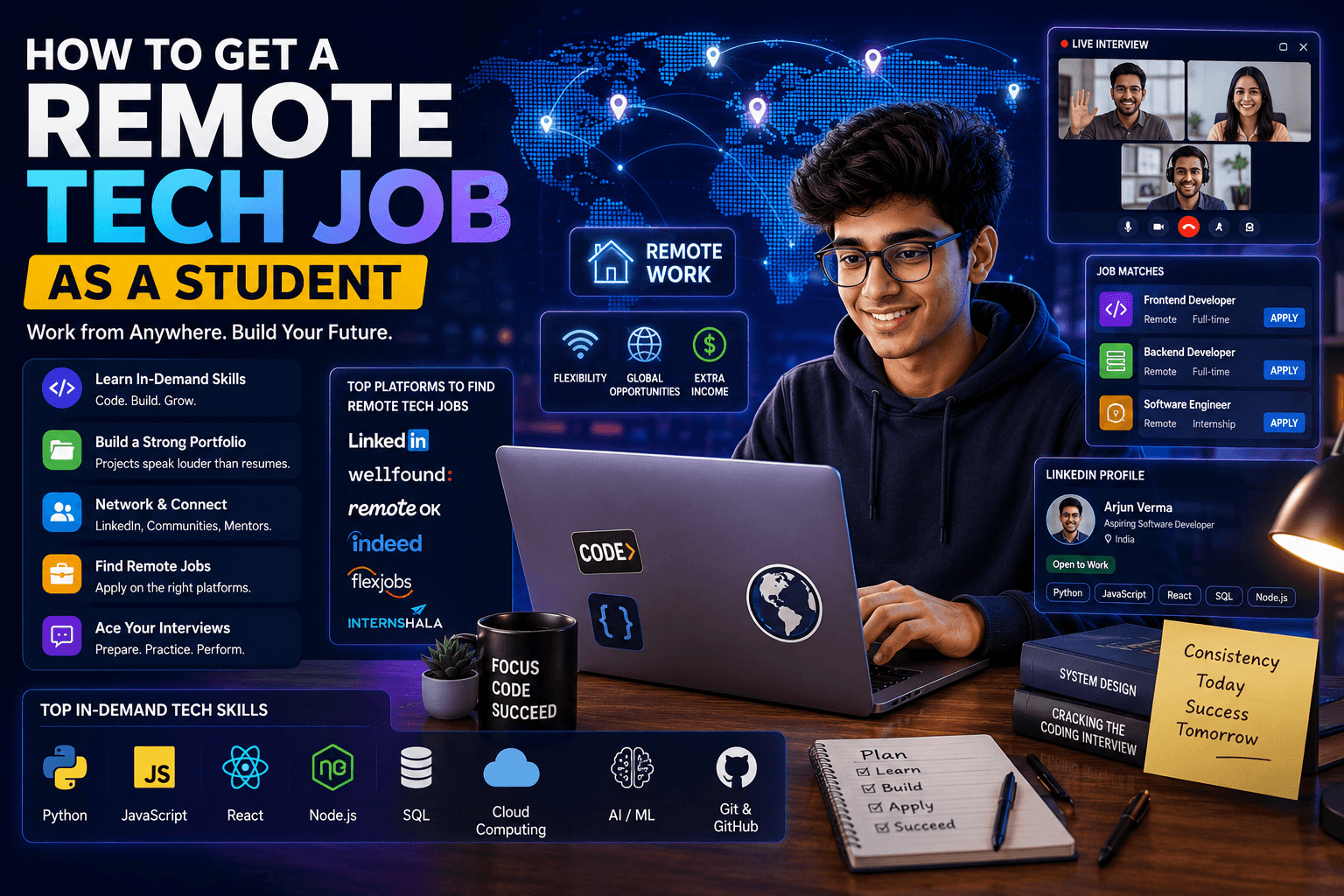
Learning How to Get a Remote Tech Job as a Student can help students gain valuable work experience, earn income, and build professional skills while continuing their education. As remote work becomes more common in the technology industry, understanding How to Get a Remote Tech Job as a Student is becoming increasingly important for aspiring developers, designers, cybersecurity professionals, and AI engineers. This guide explains the practical steps students can take to find remote opportunities and start building successful careers from anywhere in the world.
Are you a student dreaming of landing a remote tech job? You're not alone. The demand for remote work has skyrocketed, and tech companies are actively seeking fresh talent. In this guide, we'll show you how to get a remote tech job as a student — even if you have no prior experience. From building in-demand skills to acing virtual interviews, we've got you covered.
1. Build In-Demand Tech Skills
The first step to how to get a remote tech job as a student is acquiring skills that companies need. Focus on areas like web development (HTML, CSS, JavaScript), data analysis (Python, SQL), or cloud computing (AWS, Azure). Free resources like our courses can help you get started. Set aside a few hours each week to learn and practice.
Focus on Practical Projects
Employers value hands-on experience. Build a portfolio of projects — a personal website, a simple app, or a data dashboard. This demonstrates your ability to apply skills in real-world scenarios.
2. Create a Standout Resume and Portfolio
Your resume and portfolio are your ticket to an interview. Tailor your resume to highlight relevant coursework, projects, and any freelance work. Include a link to your GitHub or portfolio site. Remember, how to get a remote tech job as a student often depends on how well you present your skills.
Optimize Your LinkedIn Profile
Recruiters actively search LinkedIn for candidates. Use a professional photo, write a compelling headline (e.g., "Aspiring Web Developer | Python Enthusiast"), and list your skills. Connect with professionals in your target industry.
3. Network Strategically
Networking can open doors to hidden opportunities. Join tech communities on Slack, Discord, or LinkedIn groups. Attend virtual meetups and webinars. Don't be afraid to reach out to alumni or professionals for informational interviews. A referral can significantly boost your chances.
For more networking tips, check out other articles on our blog.
4. Search for Remote Tech Jobs
Use job boards like LinkedIn, Indeed, and Glassdoor, but also explore remote-specific platforms like Remote OK, We Work Remotely, and AngelList. Filter by "entry-level" or "internship". Set up job alerts so you never miss an opportunity.
Tailor Your Applications
Customize each application. Write a brief cover letter explaining why you're interested and how your skills match the role. Mention specific projects you've worked on.
5. Ace the Virtual Interview
Remote interviews often include video calls and technical assessments. Prepare by practicing common questions and coding challenges. Ensure you have a quiet space, good lighting, and stable internet. Show enthusiasm and ask thoughtful questions about the role and company culture.
Students looking for remote technology opportunities should explore multiple job platforms instead of relying on a single website. Different platforms specialize in internships, freelance work, remote jobs, and entry-level positions.
LinkedIn remains one of the most effective platforms for networking and job applications. Students can connect with recruiters, follow companies, and discover remote opportunities worldwide. Wellfound is another excellent platform for startup jobs, while Internshala is popular for internships and student-focused opportunities.
Freelancing platforms such as Upwork and Fiverr can also help students gain experience while earning income. Even small freelance projects can strengthen a portfolio and improve practical skills. Students should create professional profiles, highlight their projects, and continuously update their achievements to attract potential employers.
Consistency is important. Applying regularly, improving skills, and expanding professional networks can significantly increase the chances of securing a remote tech job.
"The best way to predict your future is to create it." – Peter Drucker. Start taking small steps today towards how to get a remote tech job as a student.
Conclusion
Landing a remote tech job as a student is entirely possible with the right approach. Focus on building skills, creating a strong portfolio, networking, and applying strategically. Remember, every expert was once a beginner. Start now, and you'll be surprised how far you can go. Good luck!