Introduction
The final year of college is a whirlwind of deadlines, exams, and one monumental decision: should you pursue an internship or jump straight into a full-time job after graduation? Each path offers distinct advantages and potential drawbacks, and the right choice depends on your career goals, industry norms, and personal circumstances. At GreyAcademy, we believe that understanding the nuances of this decision can set you up for long-term success. In this post, we’ll explore the key differences, weigh the benefits of each option, and provide a framework to help you decide which route aligns best with your ambitions.
The Core Difference: Learning vs Earning
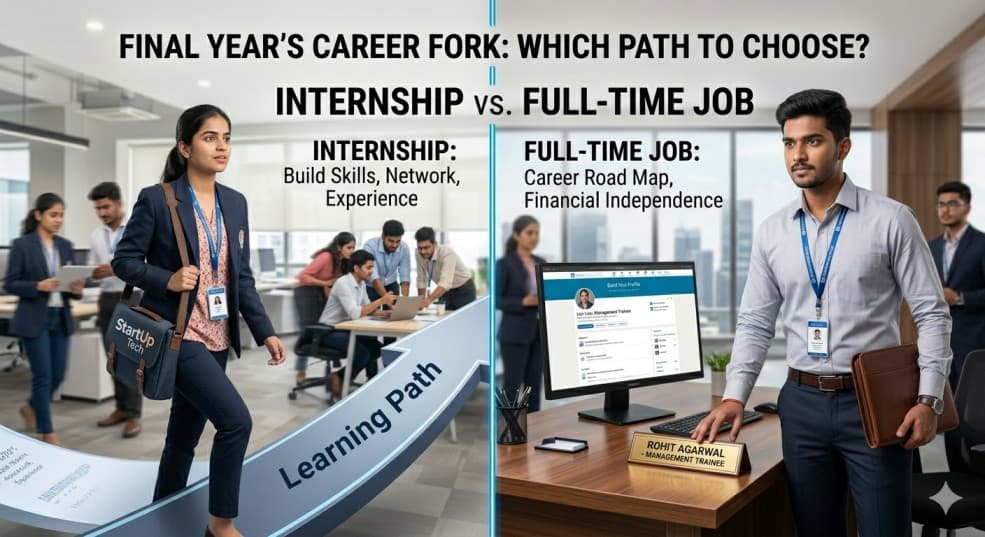
At its simplest, the choice between an internship and a full-time job boils down to a trade-off between learning and earning. Internships are designed as educational experiences, often with structured mentorship, training sessions, and exposure to multiple facets of a business. Full-time jobs, on the other hand, come with immediate responsibilities, a steady salary, and benefits like health insurance and retirement plans. But the reality is more nuanced, and your industry plays a huge role in which option is more valuable.
Internships: A Launchpad for Skills and Networks
Internships are particularly common in fields like marketing, technology, finance, and media. They offer a low-risk environment to test-drive a career. You’ll gain hands-on experience, build a professional network, and often receive feedback that helps you refine your skills. Many internships also serve as extended interviews, with top performers receiving full-time offers upon completion. For final year students, an internship can bridge the gap between academic theory and real-world practice.
Jumping into a full-time role provides financial independence and career momentum from day one. You’ll be treated as a permanent team member, with clear performance expectations and opportunities for promotion. In industries like healthcare, engineering, or skilled trades, a full-time job may be the standard entry point. The downside? You may have less flexibility to explore different roles, and the learning curve can be steep without the safety net of a mentorship program.
Key Factors to Consider
Before making your choice, evaluate these critical factors that can tip the scales in one direction.
1. Industry Standards and Expectations
In some sectors, an internship is almost a prerequisite for a full-time role. For example, investment banks and top consulting firms often hire exclusively from their intern pools. In contrast, industries like retail, hospitality, or manufacturing may prioritize direct hires who can start contributing immediately. Research your target industry’s hiring patterns by talking to alumni, reviewing job postings, and checking professional forums.
2. Your Current Skill Level
If your resume is light on practical experience, an internship can fill that gap. Internships allow you to build a portfolio, collect references, and demonstrate your ability to work in a professional environment. Conversely, if you already have substantial project experience, freelance work, or a strong portfolio, a full-time job might be the faster route to career advancement.
3. Financial Needs and Risk Tolerance
Internships are often paid, but they typically offer lower compensation than full-time roles. If you need to support yourself or pay off student loans immediately, a full-time job’s higher salary and benefits may be non-negotiable. On the other hand, if you can afford a short-term income dip, the long-term payoff of a prestigious internship can be substantial.
4. Career Clarity vs Exploration
Are you certain about your career path? If yes, a full-time job lets you dive deep. If you’re still exploring, an internship offers the chance to sample different functions—marketing, sales, operations, etc.—without a long-term commitment. Many students discover their true passion only after trying a role they hadn’t considered before.
The Hybrid Option: Part-Time Internships and Freelancing
Don’t forget that you don’t have to choose strictly between one or the other. Some students balance a part-time internship with freelance projects or a part-time job. This approach can give you both the learning experience of an internship and the income of paid work. However, it requires excellent time management and may prolong your graduation if it interferes with coursework. If your university allows, consider a co-op program that integrates work terms with academic semesters.
Real-World Perspectives from GreyAcademy Alumni
We asked a few GreyAcademy alumni who faced this exact dilemma. Here’s what they shared:
“I took a summer internship at a tech startup during my final year. It didn’t pay much, but I learned more in three months than in two years of classes. That internship led to a full-time offer with a 20% higher salary than my peers who applied directly.” — Priya, Software Engineer
“I went straight into a full-time accounting role after graduation. The stability was great, and I started climbing the ladder immediately. But I sometimes wish I had interned first to see if I really liked corporate accounting versus audit.” — James, CPA
These stories highlight that there is no one-size-fits-all answer. Your personality, risk tolerance, and career aspirations are the ultimate guides.
Conclusion
Choosing between an internship and a full-time job is one of the first major career decisions you’ll make. Both paths can lead to success, but they serve different purposes. If you need to build skills, explore options, and make connections, an internship is your best bet. If you’re ready to commit, earn a stable income, and start progressing immediately, a full-time job might be the right move. At GreyAcademy, we encourage you to weigh these factors carefully, seek advice from mentors, and trust your instincts. Whatever you choose, remember that your first job is just the beginning—not the end—of your professional journey.