Introduction
Frontend vs Backend Development is one of the first decisions aspiring web developers face when starting their tech journey. So you've decided to dive into the world of web development, awesome! But now comes the big question: should you focus on frontend or backend? It's a classic fork in the road for beginners, and choosing the right path can feel overwhelming. Don't worry, we've got your back. In this post, we'll break down what each role really involves, the skills you'll need, and how to pick the one that matches your personality and goals. By the end, you'll have a clear idea of which direction excites you most.
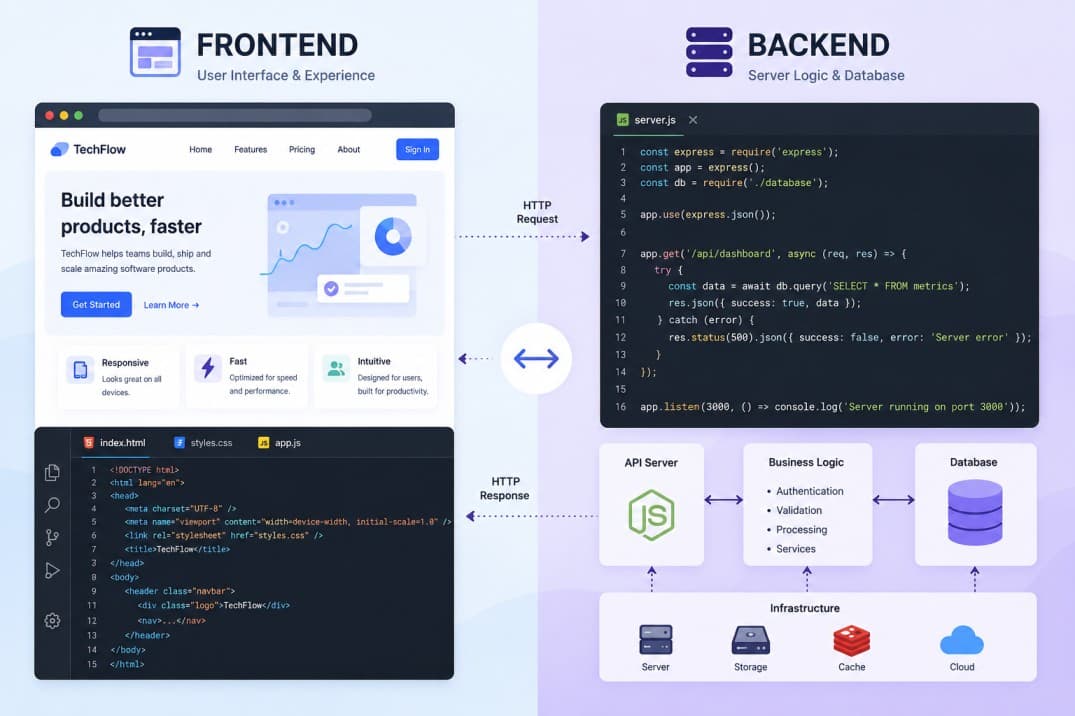
Frontend development is all about what users see and interact with. When you visit a website, everything from the layout and colors to the buttons and animations is the work of a frontend developer. Think of them as the architects of the user experience — they make sure a site looks great and feels intuitive.
Frontend vs Backend Development is one of the most common comparisons for beginners entering web development.
Key Skills for Frontend Developersś
- HTML, CSS, and JavaScript — the holy trinity of the web. HTML structures content, CSS styles it, and JavaScript adds interactivity.
- Frameworks and libraries like React, Vue, or Angular that help you build complex interfaces efficiently.
- Responsive design to ensure your sites work on phones, tablets, and desktops.
- Version control with Git to collaborate with other developers.
- Basic design sense — you don't need to be a graphic designer, but understanding color theory and typography helps.
As a frontend developer, you'll create landing pages, interactive forms, dashboards, and even entire web apps. You'll work closely with designers to turn mockups into real, clickable experiences. It's a role where you can see your work come to life immediately.
What Is Backend Development?
Backend development is the engine room of the web. While frontend handles the visuals, the backend manages data, logic, and server-side operations. When you log into a site, search for a product, or submit a form, the backend is working behind the scenes to process your request and deliver the right response.
Key Skills for Backend Developers
- Server-side languages like Python, Java, Ruby, PHP, or Node.js (JavaScript on the server).
- Databases — both SQL (like PostgreSQL, MySQL) and NoSQL (like MongoDB).
- API development (REST or GraphQL) to let the frontend talk to the backend.
- Authentication and security — protecting user data and managing logins.
- Server management and deployment basics, often using cloud platforms like AWS or Heroku.
What You'll Build
Backend developers build the logic that powers features like user accounts, payment processing, and data analytics. You'll write code that handles thousands of requests per second, optimize database queries, and ensure everything runs smoothly. It's a role for people who enjoy problem-solving and systems thinking.
Understanding Frontend vs Backend Development helps students choose the right technology stack and career path.
Frontend vs Backend: Key Differences at a Glance
- Visual vs invisible: Frontend is what users see; backend is what makes it work.
- Tools: Frontend uses browsers and design tools; backend uses servers and databases.
- Immediate feedback: Frontend changes are visible right away; backend changes often require testing and deployment.
- Problem types: Frontend focuses on user experience and cross-browser compatibility; backend focuses on data integrity, performance, and security.
Here's the truth: there's no wrong answer. It all comes down to what you enjoy. Let's look at some signs that might point you in the right direction.
You Might Love Frontend If...
- You have an eye for design and care about how things look.
- You enjoy creating things that people interact with directly.
- You like seeing immediate results from your code.
- You're comfortable with creative problem-solving and learning new visual tools.
You Might Love Backend If...
- You enjoy logic, puzzles, and building systems.
- You prefer working behind the scenes and making things efficient.
- You're interested in data, databases, and how information flows.
- You like the idea of optimizing performance and security.
Remember: many developers start in one area and later learn the other. You don't have to decide forever — just pick the one that excites you most right now.
Career Prospects and Salaries
Both paths offer excellent job opportunities and competitive salaries. According to industry reports, frontend and backend developers earn similar average salaries, though senior roles and specialized skills (like machine learning or advanced frameworks) can boost earnings significantly. The demand for both roles continues to grow as more businesses move online.
Many companies hire specialists, but knowing Frontend vs Backend Development gives developers a broader perspective.
How to Get Started
Ready to take the first step? Here's a simple roadmap:
- Learn the fundamentals — start with HTML, CSS, and basic JavaScript. These are essential for both paths.
- Build a small project — a personal website, a to-do app, or a blog. This will help you see what you enjoy.
- Explore both sides — try a backend tutorial (like building a simple API) and a frontend tutorial (like creating a responsive layout).
- Join a community — forums, local meetups, or online groups like freeCodeCamp or The Odin Project.
- Consider a full-stack approach — many beginners learn both frontend and backend basics before specializing.
Conclusion
Choosing between frontend and backend development doesn't have to be stressful. Both are rewarding careers that let you build amazing things on the web. The most important thing is to start coding, experiment, and follow your curiosity. Whether you end up crafting beautiful interfaces or building robust server logic, you'll be part of a vibrant community that's shaping the future of technology. So go ahead — pick a path, and start your journey today!
Whether you choose frontend or backend, understanding Frontend vs Backend Development will help you build a successful career in web development.