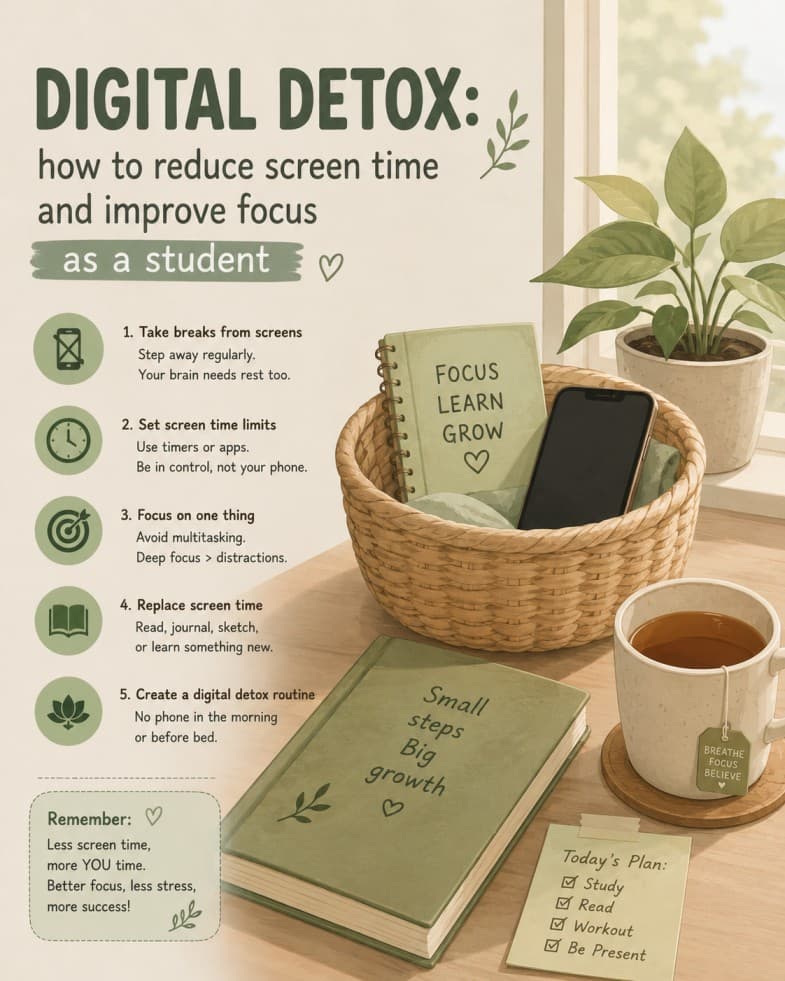
Introduction
Let’s be honest: you’re probably reading this on a phone or laptop right now. And that’s okay! Screens are a huge part of student life — from online classes and research to social media and Netflix. But when your eyes feel tired, your attention span shrinks, and your to-do list keeps growing, it might be time for a digital detox. A digital detox doesn’t mean throwing your devices out the window. It’s about creating healthier habits so you can use technology without it using you. In this post, we’ll walk through simple, actionable steps to reduce screen time and improve your focus — starting today.
Why a Digital Detox Matters for Students
Your brain is amazing, but it’s not built for constant notifications. Every ping, buzz, and scroll triggers a tiny hit of dopamine, making it hard to resist checking your phone. Over time, this can lead to digital fatigue, poor sleep, and reduced academic performance. A digital detox helps you:
- Reclaim your attention span for deep studying
- Reduce eye strain and headaches
- Improve sleep quality by lowering blue light exposure
- Lower stress and anxiety from social comparison
Think of it as a reset button for your brain. The goal isn’t perfection; it’s progress.
Start Small: The 15-Minute Rule
If the idea of a full detox feels overwhelming, start with the 15-Minute Rule. Before you reach for your phone after class or during a break, wait 15 minutes. Use that time to stretch, breathe, or just sit quietly. You’ll often find that the urge to check Instagram or TikTok fades. This simple habit builds mindfulness and gives your brain a chance to reset.
How to implement it
- Set a timer on your watch or use a physical alarm clock
- Keep your phone in your bag or another room
- Replace the first 15 minutes with a non-screen activity: drink water, journal, or take a short walk
Create Tech-Free Zones and Times
Your environment shapes your habits. Designate specific areas or times where screens are off-limits. For example:
- Tech-free study zone: Keep your desk clear of phones and tablets. Use a laptop only for essential work.
- No-screens during meals: Eat without scrolling. You’ll enjoy your food more and feel less distracted.
- Phone-free first hour: Don’t check your phone for the first 60 minutes after waking up. This prevents you from starting the day in reactive mode.
These boundaries might feel strange at first, but they become second nature within a week.
Use the “Do Not Disturb” Superpower
Your phone has a built-in focus tool: Do Not Disturb (or Focus Mode on Android). Use it liberally. Schedule it to activate during study blocks, classes, and bedtime. You can allow calls from family or close contacts if needed, but block everything else. This simple setting can reduce your screen time by 30–50% without you even thinking about it.
Pro tip for students
Set up a Study Focus profile that silences social media, games, and entertainment apps. Many phones let you customize which apps are allowed. Use this to your advantage.
A detox isn’t just about removing screens — it’s about filling the gap with things that recharge you. When you feel the urge to scroll, have a list of alternatives ready:
- Read a physical book or magazine for 10 minutes
- Do a quick stretching routine or yoga pose
- Write down three things you’re grateful for
- Call a friend or family member (voice only!)
- Listen to a podcast or audiobook (without looking at the screen)
By replacing the habit, you rewire your brain to seek deeper satisfaction.
Track Your Screen Time — and Be Honest
Most phones have a Screen Time or Digital Wellbeing feature. Check it daily. You might be shocked by how many hours you spend on apps. Set a weekly limit for social media or gaming. When you hit the limit, the app will lock you out. This external accountability helps when willpower runs low.
“What gets measured gets managed.” — Peter Drucker. Tracking your screen time is the first step to taking control.
Prioritize Sleep: The Ultimate Focus Booster
Blue light from screens disrupts your body’s production of melatonin, the sleep hormone. Poor sleep = poor focus. Aim for at least 30 minutes of screen-free time before bed. Use that time to wind down with a calming activity like reading, gentle stretching, or listening to soft music. Also, consider using a blue light filter on your devices in the evening (most phones have a “Night Shift” mode).
Study Smarter, Not Harder: The Pomodoro Technique
One of the best ways to improve focus is to work in short, intense bursts. The Pomodoro Technique is perfect for this:
- Pick a task to work on
- Set a timer for 25 minutes
- Work without any interruptions (put your phone away)
- Take a 5-minute break (no screens!)
- Repeat 4 times, then take a longer 15–30 minute break
This method trains your brain to focus deeply and gives you regular breaks to recharge. Many students find it doubles their productivity.
Conclusion
A digital detox isn’t about quitting technology forever. It’s about building a healthier relationship with your devices so you can focus on what truly matters: your learning, your well-being, and your future. Start with one small change today — maybe the 15-minute rule or a tech-free meal. You’ll be amazed at how much clearer your mind feels. At GreyAcademy, we believe in empowering you to learn better, not harder. So go ahead, put the phone down for a bit, and give your brain the space it needs to grow. You’ve got this.