Introduction
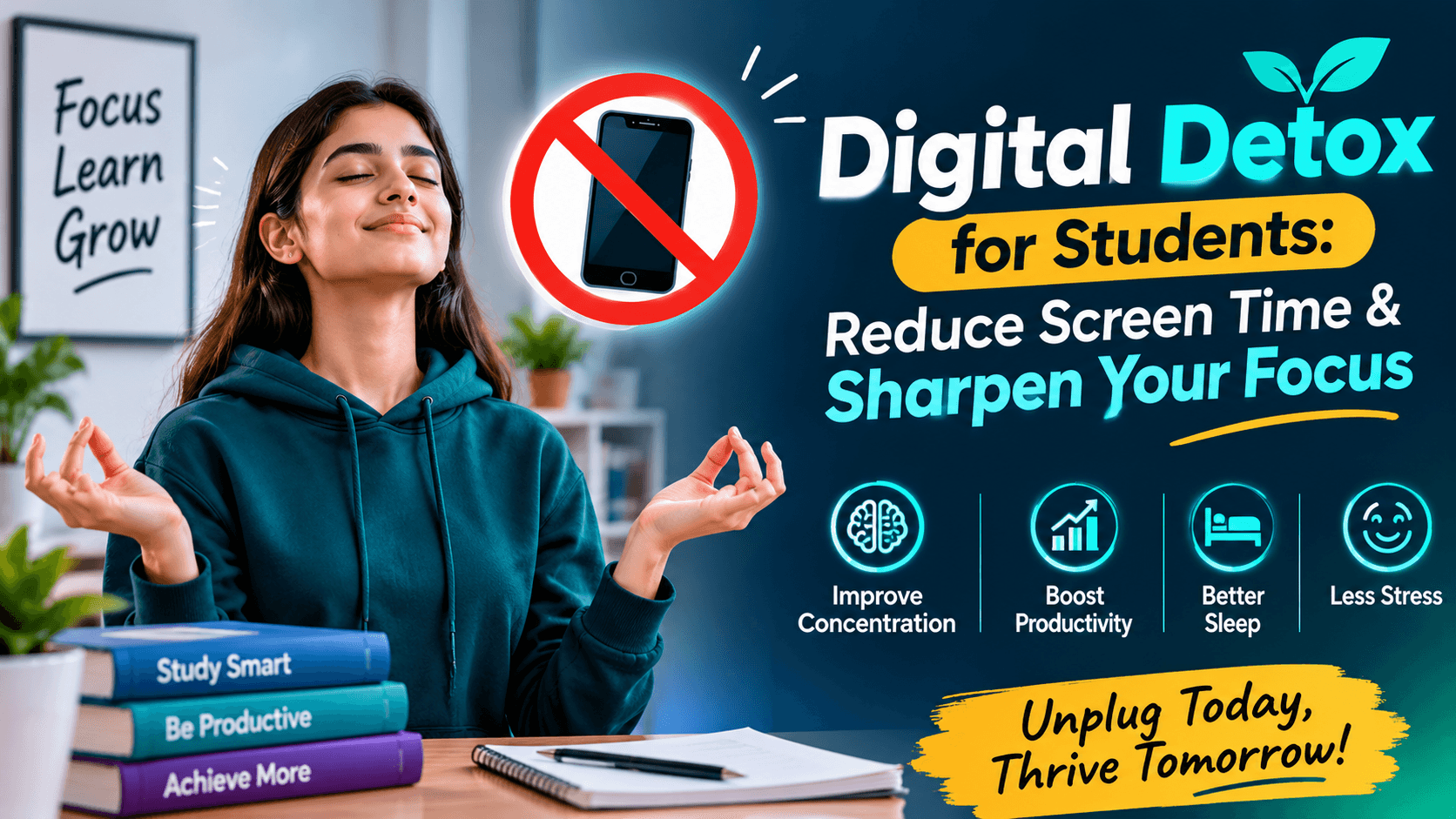
Digital Detox for Students is becoming increasingly important in today's technology-driven learning environment. From attending online classes and researching assignments to scrolling through social media and watching videos, students spend a significant part of their day looking at screens. Although technology makes learning more accessible, excessive screen time can affect concentration, sleep quality, productivity, and overall well-being.
Have you ever picked up your phone for five minutes and ended up scrolling for an hour? Or struggled to concentrate on studying because of constant notifications? These habits can gradually affect your ability to focus.
Digital Detox for Students is an effective way to reduce unnecessary screen time, improve concentration, and develop healthier technology habits. In today's digital world, students depend on smartphones, laptops, and other devices for education and entertainment.
A digital detox doesn't mean completely avoiding smartphones, laptops, or the internet. Instead, it means developing healthier technology habits, setting reasonable screen-time boundaries, and making more room for activities that support learning and personal growth.
Let's explore ten practical ways students can reduce screen time, improve focus, and develop a healthier relationship with technology.
1. Understand Why Digital Detox Matters for Students
Before changing your screen-time habits, it's important to understand why a digital detox can make a difference.
Constant notifications, social media updates, and entertainment apps create frequent distractions. Every time students switch between studying and checking their phones, they interrupt their concentration.
Excessive screen use may contribute to:
Reduced concentration during study sessions.
Eye strain and digital fatigue.
Difficulty maintaining consistent sleep schedules.
Increased stress from constant notifications.
Less time for physical activities and hobbies.
Digital Detox for Students is an effective way to reduce unnecessary screen time, improve concentration, and develop healthier technology habits. In today's digital world, students depend on smartphones, laptops, and other devices for education and entertainment.
A healthy digital routine helps students become more mindful of how they use technology and where their attention goes.
2. Start with the 15-Minute Rule
Making sudden changes to your daily routine can feel difficult. Instead of immediately reducing your screen time by several hours, begin with a simple technique: the 15-minute rule.
Whenever you feel the urge to check your phone, wait for 15 minutes before opening an app. During this time, try doing something away from your screen.
You can:
Take a short walk.
Drink water or prepare a healthy snack.
Stretch your body.
Read a few pages of a physical book.
Sit quietly and relax your mind.
This small habit helps you become more aware of unnecessary phone usage and gradually reduces automatic scrolling.
Digital Detox for Students is an effective way to reduce unnecessary screen time, improve concentration, and develop healthier technology habits. In today's digital world, students depend on smartphones, laptops, and other devices for education and entertainment.
3. Create Tech-Free Study Zones
Your study environment plays an important role in determining how effectively you concentrate. If your smartphone is always within reach, you may feel tempted to check it even when you are working on an important assignment.
Create a dedicated study space where unnecessary devices are kept away.
Some practical ideas include:
Keep your smartphone in another room during focused study sessions.
Remove unnecessary gadgets from your study desk.
Use your laptop only for learning-related activities.
Keep notebooks, textbooks, and stationery easily accessible.
If you need a laptop for online classes, close unrelated tabs and avoid opening social media during lessons.
A distraction-free study environment makes it easier to develop consistent learning habits.
4. Use Do Not Disturb and Focus Mode
One of the easiest ways to manage digital distractions is by using the built-in features available on smartphones.
Most Android and iPhone devices offer settings such as Do Not Disturb, Focus Mode, and notification management.
These features allow students to control which notifications appear during important activities.
Recommended settings for students:
Activate Study Mode during online classes.
Silence social media notifications while completing assignments.
Allow important calls from family members.
Schedule automatic Do Not Disturb during bedtime.
Disable unnecessary app notifications.
Instead of responding to every notification immediately, check messages during planned breaks.
Reducing screen time becomes easier when you replace digital entertainment with enjoyable offline activities.
Simply removing your smartphone may leave you feeling bored, making it tempting to return to old habits.
Try creating a list of activities that you enjoy without using a screen.
For example:
Read books related to your interests.
Participate in outdoor sports.
Practice drawing, painting, or writing.
Spend time with friends and family.
Learn a new skill through offline practice.
Go for a walk or try simple exercises.
These activities help students maintain a balanced routine while making better use of their free time.
6. Track Your Daily Screen Time
You cannot effectively manage a habit without understanding how much time you spend on it.
Most smartphones include screen-time tracking features that show how frequently you use different applications.
For example, students can use:
Digital Wellbeing: Available on many Android devices.
Screen Time: Available on Apple devices.
App Timers: Set daily usage limits for selected applications.
Focus Tools: Restrict access to distracting apps during study hours.
Start by checking your daily screen-time report. Identify which applications consume most of your time and decide where you can make improvements.
For instance, if you spend three hours scrolling through social media every day, try reducing that time gradually rather than making unrealistic changes overnight.
7. Improve Sleep by Following a Screen-Free Bedtime Routine
Sleep is essential for memory, concentration, and academic performance. However, spending excessive time on smartphones before bedtime can delay sleep and interfere with a consistent nighttime routine.
A digital detox for students should also include healthier evening habits.
Consider following these simple practices:
Stop using entertainment apps at least 30 minutes before bedtime.
Avoid checking notifications after going to bed.
Keep your smartphone away from your pillow.
Read a physical book before sleeping.
Maintain a consistent sleeping and waking schedule.
Digital Detox for Students is an effective way to reduce unnecessary screen time, improve concentration, and develop healthier technology habits. In today's digital world, students depend on smartphones, laptops, and other devices for education and entertainment.
You can also enable night settings on your devices to reduce screen brightness in the evening.
Remember that good sleep habits support better concentration and help you feel refreshed the next morning.
8. Use the Pomodoro Technique to Improve Study Focus
The Pomodoro Technique is a simple time-management method that helps students organize their study sessions.
Instead of studying continuously for several hours, divide your work into shorter, focused sessions.
How to follow the Pomodoro Technique:
Select one study task.
Set a timer for 25 minutes.
Focus entirely on the task without checking your phone.
Take a five-minute break.
Repeat the process four times.
Take a longer break of 15–30 minutes.
During short breaks, try stretching, drinking water, or walking around instead of opening social media.
This approach makes studying more manageable and encourages students to develop consistent concentration habits.
9. Build a Balanced Daily Digital Routine
A successful digital detox doesn't require avoiding technology completely. Students need digital devices for education, communication, research, and professional development.
The key is to distinguish between necessary and unnecessary screen usage.
Here is an example of a balanced daily routine:
Activity | Suggested approach |
|---|
Morning | Avoid social media immediately after waking up |
Study time | Use devices only for essential learning activities |
Afternoon | Take breaks away from screens |
Evening | Limit entertainment and unnecessary scrolling |
Night | Follow a screen-free bedtime routine |
Adjust this schedule according to your classes, assignments, and personal responsibilities.
Consistency is more important than following a perfect routine every day.
10. Stay Consistent and Celebrate Small Improvements
Developing healthier digital habits takes time. You may occasionally spend more time on your phone than planned, and that's completely normal.
Digital Detox for Students is an effective way to reduce unnecessary screen time, improve concentration, and develop healthier technology habits. In today's digital world, students depend on smartphones, laptops, and other devices for education and entertainment.
Instead of feeling discouraged, focus on the progress you are making.
Set realistic weekly goals, such as:
Reducing unnecessary screen time by 15–20 minutes daily.
Completing one distraction-free study session.
Avoiding social media during meals.
Following a screen-free bedtime routine.
Spending more time on offline hobbies.
Track your improvements every week and adjust your habits whenever necessary.
Small, consistent changes can gradually create a healthier relationship with technology.
Conclusion
A Digital Detox for Students is not about giving up technology or avoiding the internet completely. It is about learning how to use digital devices responsibly while protecting your concentration, sleep, productivity, and personal well-being.
From following the 15-minute rule and creating tech-free study zones to tracking screen time and using the Pomodoro Technique, even small changes can make a meaningful difference.
Remember, technology should support your education rather than constantly distract you from your goals.
At GreyAcademy, we believe effective learning starts with the right habits, a focused mindset, and continuous improvement. Take the first step today: put unnecessary distractions aside, focus on your priorities, and make your learning time more productive.
Your attention is valuable. Make sure you use it wisely!