Introduction
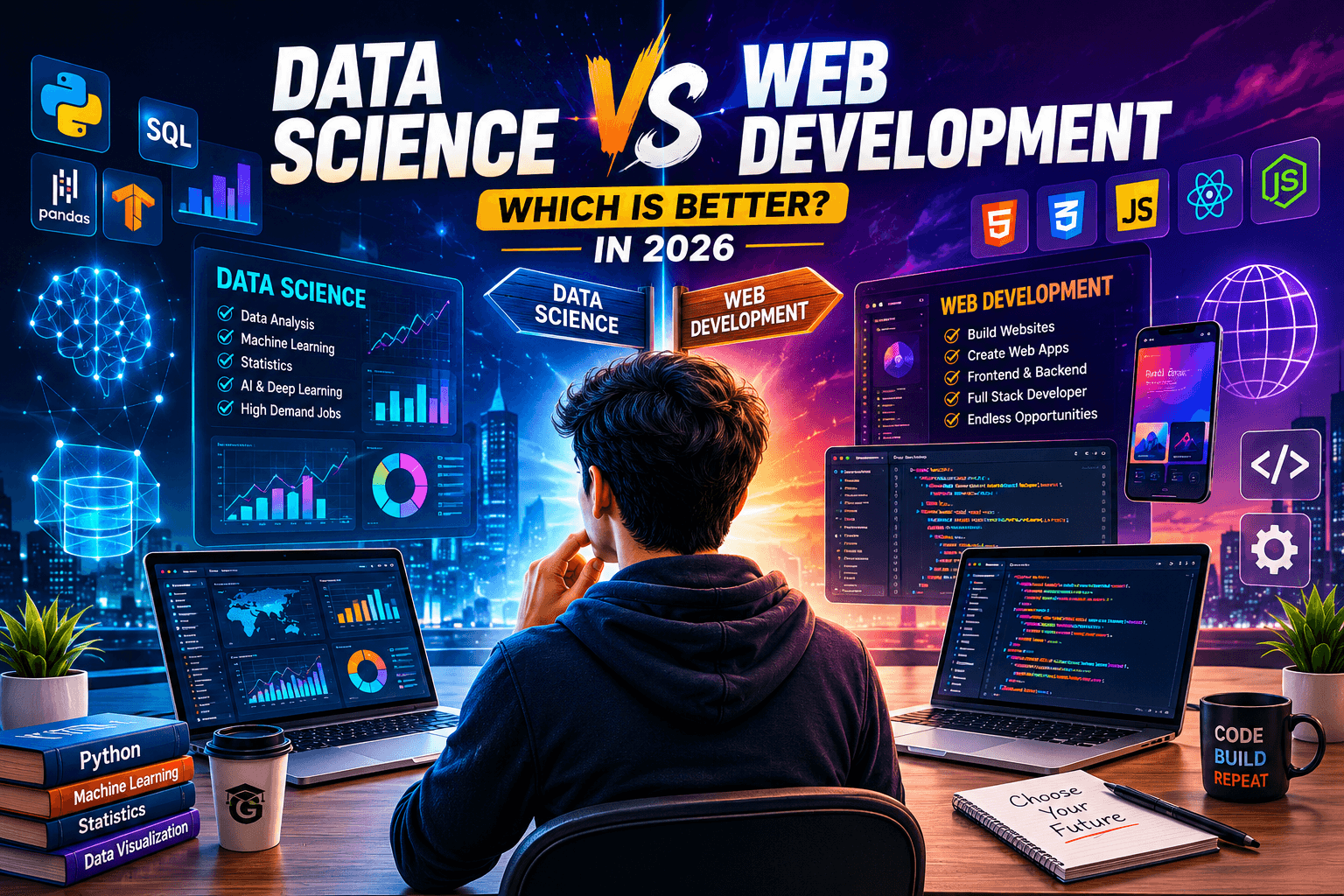
Choosing between data science vs web development is one of the biggest dilemmas for beginners stepping into tech in 2026. Both fields offer exciting opportunities, but they require different mindsets and skills. In this friendly guide, we'll break down the key differences—salary, learning curve, job demand, and future trends—so you can decide which path aligns with your interests and goals. Whether you love crunching numbers or building interactive websites, by the end you'll have a clear picture of which career might be better for you.
What is Data Science?
Data science involves extracting insights from structured and unstructured data using statistical analysis, machine learning, and programming. Data scientists build models to predict trends, optimize processes, and drive business decisions. Typical tools include Python, R, SQL, and libraries like TensorFlow and Pandas. In 2026, data science continues to be in high demand across finance, healthcare, e-commerce, and more.
What is Web Development?
Web development focuses on creating websites and web applications. It splits into frontend (user interface), backend (server-side logic), and full-stack (both). Developers use HTML, CSS, JavaScript, and frameworks like React, Angular, or Node.js. Web development is essential for businesses to establish an online presence, and the field evolves rapidly with new tools and best practices.
Key Comparisons: Data Science vs Web Development in 2026
1. Salary and Job Market
Both fields offer competitive salaries. According to industry reports, entry-level data scientists in India earn around ₹6-12 LPA, while web developers start at ₹3-6 LPA. However, senior roles in web development (especially full-stack) can match data science salaries. In 2026, data science roles are growing at 28% annually, while web development grows at 13%. But web development has more entry-level positions, making it easier to land a first job.
2. Learning Curve
Data science has a steeper learning curve due to mathematics (statistics, linear algebra) and machine learning concepts. Web development is more accessible for beginners; you can build a basic website in weeks. However, mastering advanced frameworks and full-stack development takes time. If you enjoy logic and creativity, web development might feel more intuitive. If you love puzzles and data, data science could be your calling.
3. Day-to-Day Work
Data scientists spend their days cleaning data, building models, running experiments, and presenting insights. It involves a lot of research and iteration. Web developers write code, debug, collaborate with designers, and deploy features. The work is more tangible—you see your creations come to life in a browser. Both require problem-solving, but the context differs.
4. Future Trends
In 2026, AI and automation are transforming both fields. Data science is merging with AI engineering, while web development is embracing low-code platforms and AI-powered tools. However, core skills remain valuable. Data science will see growth in ethical AI and domain-specific roles. Web development will focus on progressive web apps, serverless architecture, and WebAssembly.
Which One Should You Choose?
Ask yourself: Do you prefer working with numbers and discovering hidden patterns? Or do you enjoy building user-friendly interfaces and solving real-time problems? If you're still unsure, start with a free course from our courses to test the waters. Both paths offer excellent career prospects in 2026. The 'better' choice is the one that keeps you motivated to learn and grow.
Conclusion
In the debate of data science vs web development, there's no universal winner. Your decision should be based on your interests, learning style, and career goals. Data science offers deep analytical challenges and high earning potential, while web development provides quick entry and creative satisfaction. Whichever you choose, continuous learning is key. Explore more career insights in other articles on our blog.
In the end, choosing between Data Science vs Web Development depends on your interests and career goals.