Why Critical Thinking Skills for Students Matter in 2026
The world is changing faster than ever. In 2026, students face a flood of information, complex global challenges, and a job market that values adaptability. That's why critical thinking skills for students are no longer optional—they're essential. Whether you're solving a math problem, analyzing a news article, or deciding on a career path, thinking critically helps you cut through noise and make smart choices. At GreyAcademy, we believe every student can sharpen this superpower.
In this blog, we'll explore what critical thinking really means, why it's a top skill for 2026, and how you can practice it daily. Ready to level up? Let's dive in.
What Are Critical Thinking Skills for Students?
At its core, critical thinking is the ability to think clearly and rationally. It involves questioning assumptions, evaluating evidence, and considering different perspectives. For students, this means going beyond memorizing facts—it means understanding the "why" and "how."
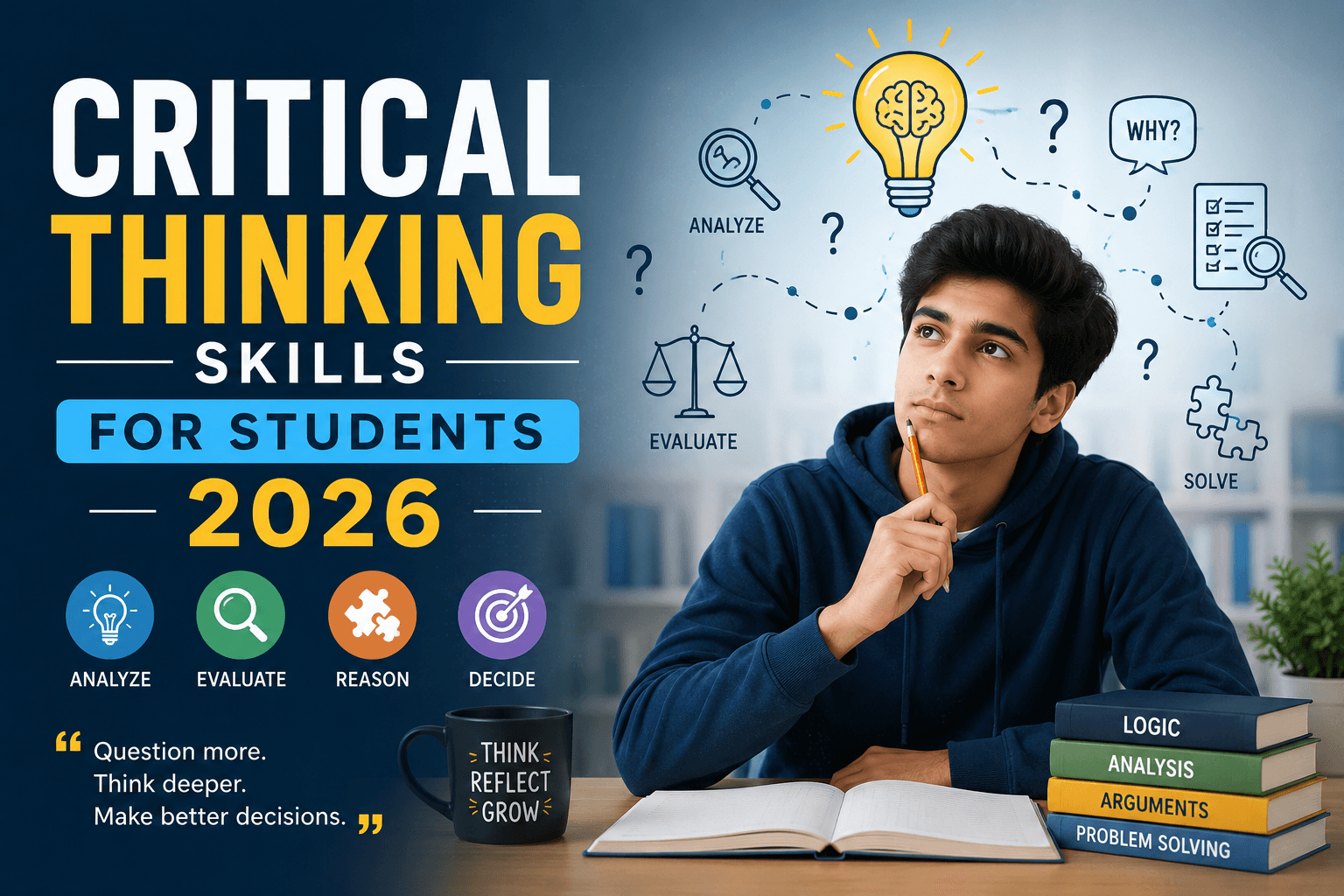
Key components include:
- Analysis: Breaking down complex ideas into smaller parts.
- Evaluation: Judging the credibility of sources and arguments.
- Inference: Drawing logical conclusions from available data.
- Explanation: Clearly articulating your reasoning.
- Self-regulation: Reflecting on your own thought processes.
When you develop critical thinking skills for students, you become a better problem-solver, a more persuasive communicator, and a lifelong learner.
Why 2026 Demands Stronger Critical Thinking
The future is unpredictable. Automation and AI are taking over routine tasks, but they can't replicate human judgment. Employers in 2026 will prize employees who can think creatively, adapt quickly, and make ethical decisions. According to the World Economic Forum, critical thinking will be among the top skills required by 2025 and beyond.
For students, this means exams and grades aren't enough. You need to demonstrate the ability to tackle real-world problems. Whether you're studying science, humanities, or commerce, critical thinking skills for students give you an edge in college admissions, internships, and future careers.
Practical Ways to Build Critical Thinking Skills for Students
You don't need a special class to start thinking critically. Here are simple, actionable strategies you can use today:
1. Question Everything
Start with the basics: Who, What, When, Where, Why, and How. When you read a textbook or watch a video, ask yourself: Is this true? What's the evidence? Are there other viewpoints? This habit trains your brain to look deeper.
2. Practice Active Listening
In group discussions, focus on understanding others' perspectives before forming your opinion. Paraphrase what they said and ask clarifying questions. This reduces bias and opens your mind.
3. Solve Puzzles and Brain Teasers
Games like Sudoku, chess, or logic puzzles are fun ways to exercise your analytical muscles. They require you to think ahead, consider multiple outcomes, and adjust strategies.
4. Write Reflective Journals
After studying a topic, write a short summary and your own analysis. What did you learn? What questions remain? This process strengthens your ability to synthesize information.
5. Seek Feedback
Share your reasoning with teachers, peers, or mentors. Ask them to point out flaws in your logic. Constructive criticism helps you improve.
For more structured learning, explore our courses at GreyAcademy, where we integrate critical thinking into every subject.
Real-Life Examples of Critical Thinking in Action
Let's see how critical thinking skills for students apply in different scenarios:
- Science class: You're conducting an experiment. Instead of following steps blindly, you predict outcomes, note anomalies, and adjust variables to test hypotheses.
- History essay: You compare two sources about an event. One is a diary, the other a government report. You evaluate their biases and reliability before drawing conclusions.
- Group project: A teammate suggests a plan. You analyze its pros and cons, consider alternatives, and facilitate a decision based on evidence.
- Daily life: You see a viral news headline. Before sharing, you check the source, look for supporting data, and consider if it's clickbait.
These habits become second nature with practice. The more you use them, the sharper your mind becomes.
How GreyAcademy Helps You Master Critical Thinking
At GreyAcademy, we design our courses to foster critical thinking skills for students. Our instructors use real-world case studies, interactive discussions, and project-based learning. You won't just memorize—you'll analyze, debate, and create.
For example, in our online courses, you might work on a marketing strategy where you evaluate consumer data, predict trends, and justify your choices. Or in a coding class, you'll debug programs by logically tracing errors. Every lesson encourages you to think like an expert.
We also offer resources like webinars, quizzes, and peer forums to practice your skills. Join a community of learners who are serious about growth.
Conclusion: Start Thinking Critically Today
The future belongs to those who can think for themselves. By developing critical thinking skills for students, you prepare for a world that rewards insight over rote knowledge. Start small—question one thing today, listen actively tomorrow, and keep building.
Ready to take the next step? Explore GreyAcademy's courses and other articles to continue your learning journey. Your future self will thank you.