Introduction
Artificial Intelligence (AI) is everywhere. From recommending your next favorite song on Spotify to helping doctors diagnose diseases, Artificial Intelligence is quietly reshaping the world around us. If you’re a student just starting to explore this exciting field, you might feel a bit overwhelmed by all the buzzwords and technical jargon. Don’t worry! This guide is designed to make AI clear, approachable, and even fun. By the end, you’ll have a solid foundation to understand what AI really is and how you can start learning more.
At its core, artificial intelligence is the ability of a computer or machine to perform tasks that normally require human intelligence. These tasks include learning, reasoning, problem-solving, understanding language, and recognizing patterns. Think of Artificial Intelligence as giving a computer a brain not a human brain, but one that can be trained to make decisions and improve over time.
Artificial Intelligence isn't about robots taking over the world It’s about creating systems that can analyze data, find insights, and help us make better choices. For example, when you use a navigation app to find the fastest route, AI is working behind the scenes to predict traffic patterns.
Key Types of AI You Should Know
To keep things simple, AI is often divided into two main categories:
- Narrow AI (or Weak AI): This is the AI we interact with daily. It’s designed to do one specific task really well — like voice assistants (Siri, Alexa), recommendation algorithms (Netflix, YouTube), or spam filters in your email.
- General AI (or Strong AI): This is the kind of AI you see in science fiction — a machine that can understand, learn, and apply intelligence to any problem, just like a human. We haven’t achieved this yet, and it remains a long-term goal for researchers.
For now, almost every AI system you’ll encounter is Narrow AI, and it’s already incredibly powerful.
How Does AI Actually Learn?
One of the most exciting parts of AI is how it learns. Instead of being explicitly programmed with every rule, AI systems are trained using data. This process is called machine learning, and it’s the engine behind most modern AI.
Here’s a simple way to think about it: Imagine you’re teaching a friend to recognize cats. You don’t give them a list of every cat’s height, weight, and whisker length. Instead, you show them lots of pictures of cats and say, “This is a cat.” Over time, your friend’s brain starts to notice patterns — pointy ears, furry bodies, whiskers, and so on. Eventually, they can identify a cat they’ve never seen before. That’s exactly how machine learning works, but with computers and data.
Three Main Types of Machine Learning
- Supervised Learning: The AI is trained on labeled data — like pictures of cats with the tag “cat.” It learns to map inputs to correct outputs.
- Unsupervised Learning: The AI is given unlabeled data and must find patterns on its own — like grouping customers by shopping habits.
- Reinforcement Learning: The AI learns by trial and error, getting rewards for correct actions. This is how AI masters games like chess or Go.
Each method has its own strengths, and researchers choose the best approach based on the problem they’re solving.
Why Should Students Care About AI?
Artificial Intelligence isn't just for computer science majors. It’s transforming every field you can imagine — healthcare, art, music, business, environmental science, and even sports. Understanding the basics of AI can give you a huge advantage, no matter what career you pursue.
Here are a few ways AI is already impacting student life:
- Personalized learning: Platforms like GreyAcademy use AI to recommend courses and adapt content to your learning pace.
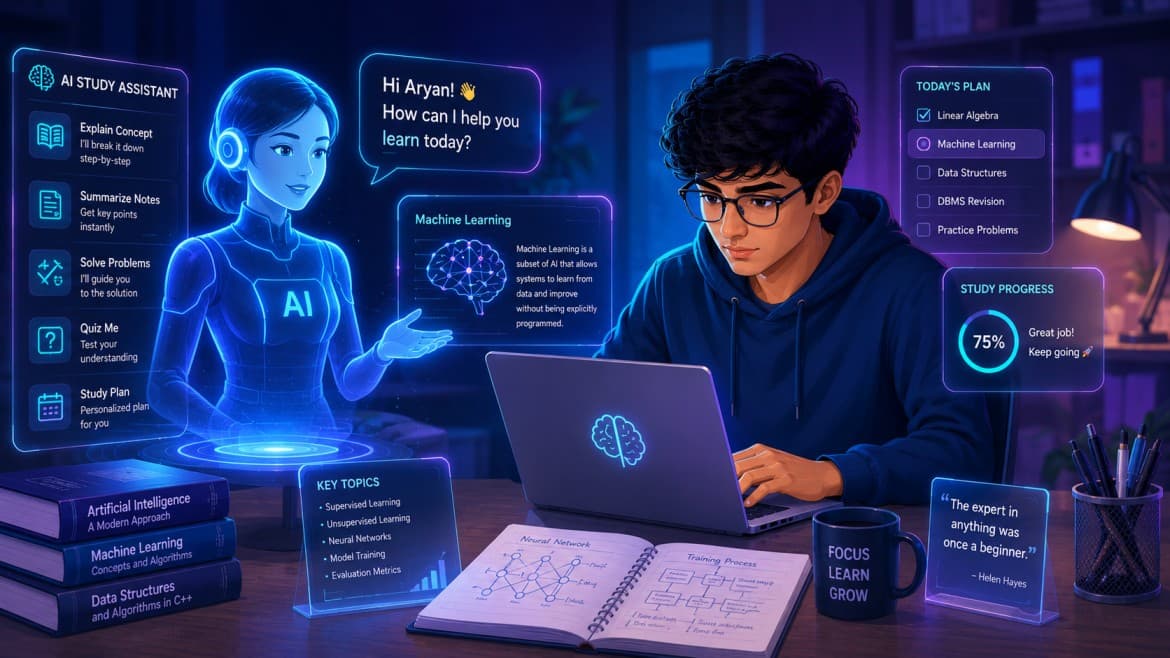
- Smart study tools: AI-powered apps can help you summarize notes, create flashcards, and even grade your essays.
- Career opportunities: Companies are hungry for people who understand AI — not just programmers, but also marketers, designers, and managers who can work with AI tools.
Plus, learning about AI is a fantastic way to develop critical thinking and problem-solving skills. You’ll start to see the world differently, asking questions like: “How does this recommendation work?” or “Is this AI being used ethically?”
Common Misconceptions About AI
Let’s clear up a few myths that often confuse beginners:
- Myth: AI is the same as robots. Reality: AI is the brain; robots are the body. Many AI systems have no physical form at all.
- Myth: AI will replace all jobs. Reality: AI will change jobs, but it’s more likely to augment human work than replace it entirely. Think of AI as a powerful tool, not a replacement.
- Myth: You need a PhD to understand AI. Reality: The basics are surprisingly accessible. With free online courses and tools like Google’s Teachable Machine, anyone can start experimenting today.
How to Start Your AI Learning Journey
Ready to dive in? Here are some practical steps for students:
- Learn the vocabulary: Familiarize yourself with terms like algorithm, neural network, training data, and model. Don’t worry about mastering them all at once.
- Take a beginner-friendly course: Platforms like GreyAcademy offer introductory AI courses that assume no prior knowledge. Look for courses with hands-on projects.
- Play with AI tools: Try out tools like ChatGPT, DALL-E, or Google’s AI Experiments. Seeing AI in action makes it real and exciting.
- Read and watch: Follow blogs, YouTube channels, and podcasts that explain AI in simple terms. Some great starting points are “Two Minute Papers” on YouTube or the “Lex Fridman Podcast” (pick beginner-friendly episodes).
- Join a community: Find online forums, Discord servers, or local clubs where students discuss AI. Learning with others keeps you motivated.
Ethical Considerations: The Human Side of AI
As you learn about AI, it’s important to think about the ethical implications. As Artificial Intelligence continues to evolve, understanding the ethical impact of Artificial Intelligence is becoming increasingly important. AI systems can reflect the biases in their training data, leading to unfair outcomes. For example, facial recognition AI has been shown to have higher error rates for people with darker skin tones. As future professionals, students have a responsibility to ask tough questions: Who benefits from this AI? Who might be harmed? How can we make AI more fair and transparent?
Understanding these issues early will make you a more thoughtful and responsible creator or user of AI technology.
Conclusion
Today, Artificial Intelligence is influencing education, healthcare, business, and countless other industries. it’s a present-day tool that’s changing how we live, learn, and work. As a student, you have the perfect opportunity to get in on the ground floor. You don’t need to be a math genius or a coding wizard to start. All you need is curiosity and a willingness to explore. So go ahead — ask questions, experiment with AI tools, and keep learning. The future is intelligent, and you can be part of shaping it.
“The best way to predict the future is to create it.” — Peter Drucker